Showing posts with label Pirkei Avos. Show all posts

Tuesday, April 14, 2015

Shemini - Narnia and the Vilna Gaon: On Choosing Literature for our Children

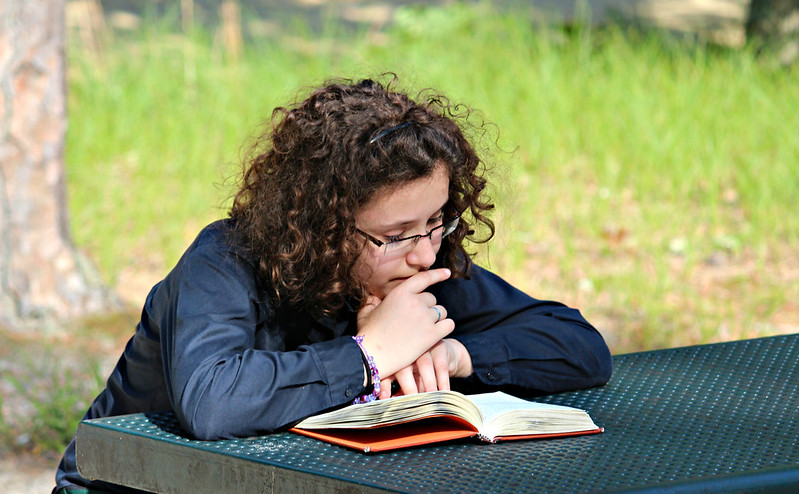
Reading in the Park
My eleven year old daughter has recently been reading the classic Narnia series by C. S. Lewis. I asked her if she had finished the first book, The Lion, the Witch, and the Wardrobe, and, after confirming that she had, I went on to inform her that C. S. Lewis was a Christian theologian, and that the Narnia series is heavily based on Christianity. In particular, I told her that Aslan, the "Lion" of the title, is actually intended to represent Jesus, that his death on the Stone Table is intended to represent the crucifixion of Jesus, and that his return to life is intended to represent the resurrection of Jesus.

Unsurprisingly, my daughter was not pleased to learn these things. In fact, she was somewhat distraught, saying that she didn't want to read a Christian book. While I certainly understood why this bothered her, I told her that the Christian elements were there whether she knew it or nor, and that she was better off knowing they were there than not. In fact, as the conversation developed, I pointed out that all non-Jewish fiction includes problematic elements of non-Jewish thinking, even when they are not explicitly religious. (This is also true for a great deal of "Jewish" fiction, including many of the books published by Orthodox publishers.) On the contrary, the most problematic literature is precisely that literature where the problematic elements are subtle and inconspicuous. When you read a book with an obvious agenda, you instinctively raise your guard and you challenge the assumptions and assertions in the text that endorse that agenda. But when the agenda is not obvious to the casual reader (as in the Narnia series), and even more so when the book truly has no agenda (because the author takes these premises for granted), then our guard is lowered and we are much more likely to accept the ideological, moral, cultural, and religious premises of the author without even realizing that we are being influenced.

This idea is alluded to in a teaching of the Vilna Gaon (פנינים משלחן הגר"א) in connection to the signs of a kosher animal. In Leviticus 11, the Torah tells us that a kosher animal must have two signs, it must have split hooves and it must chew its cud. The Torah then identifies four species that have only one sign, and which are therefore not kosher:

But, of the animals that chew their cud or that have split hooves, you shall not eat the following: the camel, because it chews its cud but does not have split hoves, is unclean to you. And the hyrax, because it chews its cud but does not have split hoves, is unclean to you. And the hare, because it chews its cud but does not have split hoves, is unclean to you. And the pig, because it has split hooves, and is cloven-footed, but does not chew its cud, is unclean to you. (Leviticus 11:4-7)
Midrashically, these four species are identified with the four "exiles" of the Jewish people: Babylonia, Persia, Greece, and Rome. (ויקרא רבה יג:ה) The exile of Rome, which continues until today, is associated with the pig, which has the superficial sign of kashrus (split hooves) but lacks the inner sign (chewing the cud).

The Talmud (Yoma 9b) states:

מקדש ראשון מפני מה חרב? מפני ג' דברים שהיו בו ע"ז וגלוי עריות ושפיכות דמים וכו' אבל מקדש שני שהיו עוסקין בתורה ובמצות וגמילות חסדים מפני מה חרב? מפני שהיתה בו שנאת חנם, ללמדך ששקולה שנאת חנם כנגד שלש עבירות ע"ז גלוי עריות ושפיכות דמים וכו'
ר' יוחנן ור"א דאמרי תרווייהו ראשונים שנתגלה עונם נתגלה קצם, אחרונים שלא נתגלה עונם לא נתגלה קצם. אמר רבי יוחנן טובה צפורנן של ראשונים מכריסו של אחרונים.
Why was the first Temple destroyed? Because of three sins that were in its time: Idolatry, sexual immorality, and bloodshed. ... But, in the time of the second Temple, when they were busy with Torah, mitzvos, and acts of benevolence, why was it destroyed? Because of the sin of unjustified hatred that existed at that time. This teaches that the sin of unjustified hatred is equal in severity to the three sins of idolatry, sexual immorality, and bloodshed.
Rabbi Yochanan and Rabbi Eliezer both said, "For the earlier people (i.e. the exiles of the first Temple), whose sins were revealed, the end (of their exile) was revealed. (The prophet told them that they would return after 70 years.) For the later people (i.e. the exiles of the second Temple), whose sins were not revealed, the end (of their exile) was not revealed." Rabbi Yochanan said, "The fingernail of the earlier ones was greater than the belly of the later ones."

The Vilna Gaon
The Vilna Gaon sees in this final statement of Rabbi Yochanan, about the "fingernail" and "belly" of the two generations, an allusion to the two signs of a kosher animal. The early generations are compared to the animals lacking the external sign of kashrus, the split hooves, in that their sins were open and acknowledged, whereas the later generations are compared to the pig, which has the superficial sign of kashrus, but does not chew of its cud, an internal process that is largely hidden from view. Thus, the generation of the first Temple, whose sins were revealed and acknowledged, was punished less severely than the generation of the second Temple, which maintained the superficial appearance of righteousness, but was internally sinful.

The essential point of the Vilna Gaon was summed up by Rav Dovid Tevele of Lissa (in a famous Shabbos HaGadol drasha in 1782, in which he condemned the proposed educational reforms of Naphtali Herz Wessely):

שהרשע המגלה רשעתו ירחיקו העם ממנו ולא ילמדו ממעשיו אבל הרשע אשר הרשעה טמונה בקרבו הוא לאבן נגף ולצור מכשול אשר יתלכדו העם אחריו והביטו אחר דבריו אשר במרמה ידבר.
The people know to distance themselves from an openly wicked person, and they do not learn from his actions, but a wicked person whose wickedness is hidden within is "a stone of stumbling and a rock of offence" who ensnares the people to follow him and to pay heed to his deceitful words.

Often, the biggest dangers are the least obvious, precisely because they are not obvious, and they therefore fail to elicit the normal protective responses against a threat. This is true in every area of life, including, perhaps especially, in the education of our children. While we certainly need to carefully screen the literature and entertainment that we expose our children to, we have to bear in mind the the biggest threats to be found in these areas are not necessarily the obvious ones. While we obviously shouldn't expose our children to outright immorality, the real challenge is often in the apparently "innocent" and "harmless" materials that we often expose our children to without hesitation.

For many parents, including myself, the natural gut reaction to this is to insist that our children only be exposed to purely "kosher" materials. Unfortunately, while this might be the ideal, I do not believe this is a realistic option for our children. Whether we acknowledge it or not, all of our homes, even the most insular, are permeated with the influences of the non-Jewish world. In the world in which we live today, there is no truly effective way to completely shut out the values, mores, and ideas of the non-Jewish world surrounding us. (As I mentioned earlier, more often than not, even ostensibly Orthodox Jewish literature carries such baggage within it.) As such, a simple policy of restricting our children's exposure is not only futile, but ultimately dangerous, as it fails to effectively train our children to recognize these influences and deal with them. So, while a certain degree of screening is certainly necessary, our general approach has to be to teach our children how to read (and watch) critically, from a proper Torah perspective.

Of course, this requires, first and foremost, a very strong Torah education. As the Sages teach us in Pirkei Avos, "הוי שקוד ללמוד תורה, ודע מה שתשיב לאפיקורוס" - "Be diligent in studying Torah, and know what to answer the non-believer." The first priority must always be Torah study. Nevertheless, in our generation, I believe it is also necessary for our children to have some exposure to non-Jewish literature, carefully guided, so that the children learn to read and think critically about such material. I readily acknowledge that this is not necessarily an easy thing to do, and that it requires a great deal of effort on the part of parents and teachers. However, I believe that this is the only truly responsible and effective approach in our time and place.


Thursday, July 5, 2012

Balak - The School of Abraham and the School of Balaam

In Parshas Balak we encounter the enigmatic case of the wicked prophet Balaam. The very idea of a wicked prophet raises obvious questions. Perhaps the most basic question is how can a person who speaks to God choose to act wickedly?

The key to this puzzle is found in the mishna in Pirkei Avos (5:19 or nearby) in which the Sages teach us:
כל מי שיש בידו שלשה דברים הללו מתלמידיו של אברהם אבינו, ושלשה דברים אחרים מתלמידיו של בלעם הרשע.
עין טובה ורוח נמוכה ונפש שפלה - מתלמידיו של אברהם אבינו. 
עין רעה ורוח גבוה ונפש רחבה - מתלמידיו של בלעם הרשע.
Whoever has these three things is from the disciples of our father Abraham, and whoever has three other things is from the disciples of the wicked Balaam.
A good eye, a subdued spirit, and a modest personality - [such a person is] from the disciples of our father, Abraham.
A wicked eye, an uplifted spirit, and a greedy personality - [such a person is] from the disciples of the wicked Balaam.
The commentaries discuss the exact nature of each of these traits (and bring Scriptural examples of each in connection to Abraham and Balaam). The basic explanation of these three traits (and its opposite extreme) is as follows:
  • עין טובה - A Good Eye: This refers to the trait of הסתפקות - being satisfied with what one has. The opposite is the "wicked eye", which is a jealousy of others and a desire to possess that which belongs to them. The full extent of the "good eye" - as defined by Rabbeinu Yonah - is generosity, i.e. the ability to give to others.
  • רוח נמוכה - A Subdued Spirit: This refers to humility. The opposite is the "uplifted spirit", i.e. arrogance and pride.
  • נפש שפלה - A Modest Personality: This refers to the trait of self-control with regard to physical desires. The opposite is the "greedy personality" that constantly seeks to satisfy every desire.
The mishna continues:
מה בין תלמידיו של אברהם אבינו לתלמידיו של בלעם הרשע? תלמידיו של אברהם אבינו אוכלין בעולם הזה ונוחלין בעולם הבא, שנאמר, "להנחיל אוהבי יש ואוצרותיהם אמלא." אבל תלמידיו של בלעם הרשע יורשין גיהנם ויורדין לבאר שחת, שנאמר, "ואתה אלהים תורידם לבאר שחת אנשי דמים ומרמה לא יחצו ימיהם ואני אבטח בך."
What is the [ultimate] difference between the disciples of our father Abraham and the disciples of the wicked Balaam? The disciples of our father Abraham eat in this world and inherit the world to come, as it says (Proverbs 8:21), "To cause those that love Me to inherit substance [in the world to come], and I shall fill their storehouses [in this world]." But the disciples of the wicked Balaam inherit Gehinom and descend into the pit of destruction, as it says (Psalms 55:24), "But you, God, shall bring them down into the pit of destruction, men of blood and deceit shall not live out half their days, and I shall trust in You."
There is a great deal to discuss in this mishna, but we will focus on a very basic issue. Although the mishna is contrasting two groups of "disciples", the disciples of Abraham and the disciples of Balaam, it is not speaking of literal students of these men. Rather, a disciple is one who follows in the path of another. Thus, Abraham and Balaam represent two opposing schools of thought, each of which has followers.

Now, whenever we speak of opposing schools of thought, we are always speaking of two different approaches to the same subject matter. (Thus, we never speak of a debate between a school of thought in art and a school of thought in chemistry.) If there is a conflict between the school of Abraham and the school of Balaam, then both schools must be dealing with the same basic issues.

The Tiferes Yisrael (commentary on the Mishna by R' Yisroel Lipschutz, d.1860) explains the nature of the two schools of thought:
[מתלמידיו של אברהם אבינו] אפילו הוא עכו"ם, עכ"פ הוא מתלמידי אאע"ה שלימד לכל בני עולם דעת אלהים ומדות ישרות. ומה"ט לא נקט תנא תלמידי משרע"ה, דתלמידי משרע"ה צריכים לקיים כל התורה.
[One who possesses these three traits,] even if he is a gentile, is still from the disciples of our father, Abraham, for he taught all mankind the knowledge of God and upright character. It is for this reason that the mishna did not say, "the disciples of Moses, our teacher", for the disciples of Moses must uphold the entire Torah.
Thus, the school of Abraham is one that is far broader than the conventional limits of "Judaism," and applies to all mankind. It is the school that follows the basic teachings of Abraham, i.e. the knowledge of God (דעת אלהים) and upright character (מדות ישרות).

As is clear from Scripture, Balaam also fully recognized God as the Creator and All-Powerful Lord of the universe. Balaam also had דעת אלהים - the knowledge of God. However, while Balaam's intellectual recognition of God was of an extraordinarily high level, he did not recognize the importance of מדות ישרות - upright character. To Balaam, and those who follow in his path, the knowledge of God is all that matters. Yet, not only is this insufficient, but, as the mishna states, the knowledge of God without upright character is literally the path to damnation.

R' Samson Raphael Hirsch
This idea is expressed by R' Samson Raphael Hirsch in his commentary on the Torah in this parsha (Numbers 22:8) (emphasis added):
We saw in Abraham's time that, in the midst of a polytheistic world, there was still a Malchi Zedek, the priest of the highest god, who was the One and only God of the Abrahamites, how Job and his friends appeared as pure honourers of this One, so we see Balaam also considering himself and calling himself solely in service of this One.
Altogether, the monotheistic truth as opposed to the polytheistic error is not the special, and certainly not the whole, characteristic of Judaism. That is rather the monotheistic truth with the full realization of what it entails for human living, the identifying One God with one mode of life, by His revealed Law.
But Balaam's monotheistic spiritual height appears morally muddled, far off from even that of Malchi Zedek, far from a Job and his friends. His high spiritual gifts bringing him near to God were subordinated to his egoism and placed themselves at the service of earthly potentates and mighty ones and their lowest desires.
This is a profoundly important lesson. A Jew can only function as a Jew, a disciple of Moses, if he is already functioning on the more basic level of a proper human being, a disciple of Abraham. While a proper human being must have knowledge of God, that is only the beginning. To be a true disciple of Abraham one must also have מדות ישרות - proper character traits. Otherwise, regardless of one's apparent spiritual achievements, one is actually on the path to the pit of destruction.