Friday, November 16, 2012

Toldos - The Voice of Jacob and the Hands of Esau

In Parshas Toldos we read of the incident when Jacob, in obedience to the prophetic directive of his mother, was required to approach his blind father disguised as Esau, his brother, in order to receive his blessing. Jacob raised the concern that Isaac would know he was not Esau by feeling him, so Rebecca clothed him in Esau's clothing and covered his arms and neck with kid skin (to make him feel hairy like Esau). Thus, when Jacob approached his father, Isaac heard his voice and felt his hands, and remarked (Genesis 27:22):
הקול קול יעקב והידים ידי עשו
“The voice is the voice of Yakov, and the hands are the hands of Eisav.”

The Midrash Raba (65:20) writes on this verse:
אין יעקב שולט אלא בקולו – הקול קול יעקב, והידים ידי עשו – אין עשו שולט אלא בידים... בשעה שיעקב מרכין בקולו ידי עשו שולטות... ובשעה שהוא מצפצף בקולו... אין ידי עשו שולטות... בזמן שקולו של יעקב מצוי בבתי כנסיות אין הידים ידי עשו, ואם לאו הידים ידי עשו
Jacob dominates only through his voice (i.e. Torah and prayer) – “The voice is the voice of Jacob, and the hands are the hands of Esau” – Esau dominates only through the hands (physical force).... When Jacob lowers his voice, the hands of Esau dominate... and when he calls out with his voice... the hands of Esau do not dominate. ... When the voice of Jacob is found in the synagogues, the hands are not the hands of Esau, and if not, then the hands are the hands of Esau .”
This medrash teaches us that with our voices – in Torah study and prayer – the Jewish people determine whether violence will be the dominant force in the world. The commentaries add that when the Jewish people use their voices properly, then they merit that the hands of Esau will not only not be harmful, but will even be beneficial, serving the greater good and enabling the Jewish people to serve God fully. (דגל מחנה אפרים)

Tuesday, November 13, 2012

The Greeks and Greek Philosophy in Traditional Jewish Thought

The Greeks first entered Jewish history via the conquest of the Persian Empire by Alexander the Great, towards the end of their “Classical Period”. Historians refer to the period beginning with the death of Alexander the Great as the “Hellenistic Period”.

Origins of the Greeks

In Genesis 5:32 we are told that Noah had three sons, Shem, Ham, and Japheth. In Genesis 10 we read how these three men were the ancestors of all the “seventy nations” of humanity. Japheth had seven sons, one of whom was named Javan (יון – pronounced “Yavan”). According to Jewish tradition, Javan was the ancestor of the Greeks. Traditionally, the Jews have always referred to the Greeks as Yavanim rather than Hellenes, the name that the Greeks used for themselves.[1]

Although the Greeks viewed themselves as one group, bound together by bonds of blood, culture, and religion, they were far from being a unified people. On the contrary, all of Greek history is made up of constant wars between the different Greek states. It was only when confronted by the clear threat of the Persian Empire that the Greek nations were able to unite in mutual defense. Even this was only achieved with great difficulty and lasted for a very short time. Not long after the Persian conquest was defeated, the Peloponnesian war broke out between Athens and Sparta and their respective allies.

Eventually, the Greek states were united through the conquest of Philip of Macedonia. Macedonia was a semi-Greek state to the north of Greece. When Philip was assassinated, his son Alexander, whom we know as Alexander the Great, succeeded him. Alexander’s rise to power marks the beginning of a new era in world history.

Greek Wisdom

The Greeks were unique among the nations in their pursuit of wisdom and knowledge. The Maharal (R’ Yehuda Loew, d.1609) writes (ספר נר מצוה):
... מלכות זה [יון] כנגד ... השכל, שהמלכות הזה היה בו החכמה והתבונה ... כי כל ענין המלכות זה שהיו מבקשים החכמה...
This kingdom [Greece] represents the… intellect, for this kingdom had wisdom and understanding… for the entire theme of this kingdom was that they sought wisdom.
The Sages recognized Greek culture as being uniquely superior to other non-Jewish cultures. Thus, for example, the one language in which it was permitted to write a Torah scroll, other than Hebrew, was ancient Greek. The Mishna (Megilla 1:8) states:
...בספרים לא התירו שיכתבו אלא יונית
For [Torah] scrolls they only permitted Greek.
The Jerusalem Talmud (Megilla 1:9) explains:
בדקו ומצאו שאין התורה יכולה להיתרגם כל צורכה אלא יוונית
The [Sages] searched and found that the Torah cannot be properly translated in any language except Greek.[2]
The Talmud explains that this was a fulfillment of the blessing given to Japheth, the ancestor of the Greeks, by Noah (Genesis 9:27):
יפת אלקים ליפת וישכון באהלי שם...
May God expand Japheth, and he will dwell in the tents of Shem…
The Greeks were the creators of philosophy. Indeed, the term “philosophy” is a Greek word that means, “love of knowledge”. In ancient times, the term “philosophy” was applied to all forms of wisdom, including the sciences. However, and perhaps more importantly, Greek philosophy emphasized the study of the nature of the world, the definition of good and evil, and other basic questions about existence and humanity. It is in this regard that we use the term “philosophy” today.

Although the Jewish people did not engage in formal philosophical study in ancient times, the Greeks still recognized the Jews as being uniquely knowledgeable in these fields. As historian John G. Gager has written, "In the Greco-Roman world, the earliest and most abiding view of the Jews was as a nation of philosophers."[3]


The influence of Greek philosophy – especially the works of the greatest of the Greek philosophers, such as Socrates, Plato, and Aristotle – on human thought has been absolutely immense, extending even into modern times. Thus, it is not surprising that many later Jewish sources discuss the teachings of these philosophers at great length. While the Jewish perspective on Greek thought is often highly critical, even the most critical sources will generally acknowledge the intellectual achievements of these men. For example, Rabbi Yehuda HaLevi, a strong critic of both the philosophers and of philosophy in general, makes the following statement defending them in his Kuzari:[4]
הפילוסופים אין להאשים אותם, מפני שהם עם שלא נחלו חכמה ולא תורה....
ולפיכך, בדין הוא שלא נאמין לאריסטו בחכמתו, מפני שהטריח את שכלו ומחשבתו בעבור שלא היתה בידו קבלה ממי שיאמין בהגדתו... ואלו היה הפילוסוף באמה שינחל בה מקבלות ומפרסמות שאינו יכול לדחות אותם היה מתעסק בהקשותיו ומופתיו להחזיק החידוש – עם קשיו – כאשר החזיק הקדמות, אשר היא יותר קשה לקבל.
The philosophers should not be blamed [for their errors], for they are a nation that did not inherit wisdom and Torah…[5]
Therefore, we cannot have confidence in the philosophy of Aristotle. For he labored with his intellect and thought because he did not have a reliable tradition …. If the philosopher had lived in a nation [like the Jews] with reliable and well-known traditions that could not be falsified, he would have labored with his logical arguments and proofs to strengthen the concept of creation – with its difficulties – as he [instead] did with the concept of eternity, which is even more difficult to accept.[6]
Thus, R’ Yehuda HaLevi argues that the failure of the Greek philosophers to recognize the truth of creation and of God’s relationship with this world stemmed primarily from their exclusive reliance on their own intellect because they came from a nation with no reliable tradition of revelation. Indeed, the Kuzari (4:13, 5:14) later quotes Socrates making this very point:[7]
אמר סקראט אל העם, חכמתכם זאת האלקית אינני מכחישה, אך אני אומר שאינני יודעה, אמנם אני חכם בחכמה אנושית.
(ר"ל, מאחר שאין לי דת מקובלת, בדין הוא שאהיה נוטה אחר העיון האנושי – פי' אוצר נחמד.)
Socrates said to the nation [i.e. the leaders of Athens], “I do not deny your wisdom of god, but I simply do not know it, however, I am knowledgeable in human wisdom.”
(Meaning, “As I do not have a received religion [i.e. a religion based on a revelation and reliable tradition], it is only logical that I should turn towards human understanding.” – Otzar Nechmad)
Many traditional sources argue that the immense intellectual achievements of these Greek philosophers had to result from Jewish influence. Thus, for example, there are legends that Socrates received his wisdom from Ahitophel and Asaph haKarchi[8], and that Plato[9] received wisdom from the prophets, particularly Jeremiah.[10]

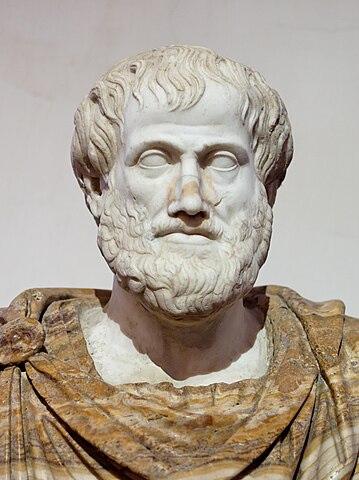
Aristotle

Aristotle
The philosopher Aristotle was one of the greatest intellects of all time. His numerous works were all recognized as the authoritative works in their fields, and they covered every single area of human knowledge of that time. He wrote on the physical and biological sciences, on logic and mathematics, political science and psychology, art and poetry, and many other fields. His work was so influential that later generations treated his writings almost like holy script.

Aristotle was hired by Philip of Macedonia to tutor his son Alexander. Later, when Alexander became the king of Greece, and eventually most of the civilized world, he supported his former tutor, enabling him to found his own philosophical school in Athens and to engage in extensive research.

Jewish tradition has very mixed feelings about Aristotle. On one hand, Maimonides clearly had a very high opinion of Aristotle, writing:[11]

דעת ארסטו היא תכלית דעת האדם מלבד מי שנשפע עליהם השפע האלקי עד שישיגו אל מעלת הנבואה אשר אין למעלה ממנה.
The intellect of Aristotle was the ultimate intellect possible for a human being except for someone upon whom flows the Divine “flow” to the point that he achieves prophecy, above which there is no higher level.
Nevertheless, Maimonides was far from a slavish follower of Aristotle, especially when Aristotle’s conclusions differed from the Torah. Similarly, the Kuzari quoted above, and other sources, appear to see him as a basically honest and brilliant man who struggled to find the truth but failed due to his background. There is even a legend (almost certainly apocryphal) that, towards the end of his life, he became acquainted with the teachings of the Torah and recognized its truth.[12]

On the other hand, other traditional sources speak very negatively of Aristotle. For example, the Vilna Gaon (R’ Elijah of Vilna, d.1797) is quoted as saying "שודאי הוא שהיה אריסטו כופר מתחילה ועד סוף" – “It is certain that Aristotle was a denier from beginning to end.”[13]

The Rema (R’ Moshe Isserles, d.1572), in his work, Toras HaOlah (1:11), recounts a story of Aristotle which reflects the belief, mentioned previously, that Greek wisdom originally came from contact with the Jews, and which also puts Aristotle in a very negative light:
כתב בשבילי אמונה כי כל עיקר חכמת ארסטוטליס גנובה מחכמת שלמה ע"ה, כי כאשר כבש אלכסנדרוס מוקדן ירושלים, השליט לאריסטוטלס רבו על אוצר ספרי שלמה, וכל דבר טוב שמצא בהן כתב שמו עליו, ועירב בהן מקצת דעות רעות כמו קדמות העולם וכפירת השגחה לחפות עליו שלא ידעו הבריות שבאו אחריו שגנב החכמה מיהודי, ואפשר שכל דבר שלא מצא עליו מופת חותך בדברי שלמה לא האמינו
It is written in Shvilei Emunah[14] that the entire essence of the wisdom of Aristotle was stolen from the wisdom of [King] Solomon. For when Alexander the Macedonian conquered Jerusalem, he appointed his teacher, Aristotle, over the library of the books of Solomon, and every good thing that [Aristotle] found there, he wrote his name on, and he blended in some bad opinions, such as the [belief in] the pre-existence of the world and the denial of [Divine] providence, to cover himself so that the people who came after him would not know that he stole the wisdom from a Jew. And, possibly, anything in the words of Solomon which he did not find a clear proof for he did not believe.[15]
Interestingly, a number of works attributed to Aristotle were translated into Hebrew and were treated as valid sources of wisdom. In particular, Aristotle’s Nicomachean Ethics – known in Hebrew as Sefer HaMiddos – is particularly significant and widely cited.

Hellenism and Judaism

R' Samson Raphael Hirsch
Rabbi Samson Raphael Hirsch (d.1888) writes[16] that Hellenism serves a vital spiritual function in lifting man out of the pit of savage vulgarity and licentiousness that is symbolized by Ham, the raw, uncultured man. Only after man has developed the higher and nobler sensibility symbolized by Japheth is it then possible for him to turn to the even higher spiritual aspirations of Shem:
[T]he education of raw unrefined humanity ton the sense of beauty is not the highest. Wavering, unsettled is the culture which only gives Man the satisfying of his own higher standards as the criterion of the activities of his life, but gives him no ideal external to himself, glowing in its own lights, as a beacon, a goal and a criterion. Only that which can elevate the mind to a knowledge of, and the feelings to a recognition of what is good and true in itself, leads a man to the height of what he is meant to be. …
But… this goal will not be achieved at once. … Out of the raw, uncultured man, a cultured man has first to be made. The demand which the God of Shem makes is no small one, it demands the complete devotion and and submission of the whole person to God. A person must first acquire “the taste” of something higher than he is in his raw nature, even if this something higher is at first also something that appeals to his senses. … This culture of beauty and grace… is a precursor of the semitic mission, a preparatory school for teaching people to reach the loftier concept of life, the still greater beauty which lies in a harmonious joining all the aspects of life under the single idea of devotion to God.

[1] The Greeks were divided into three tribes, the Ionians, the Dorians, and the Aeolians. Of these three groups, the Ionians appear to have been dominant. In particular, Athens – the center of Greek culture and, for much of Greek history, the most powerful Greek state – was Ionian. Ionia is also the name given to a region of Asia Minor on the eastern shore of Aegean Sea that was settled predominantly by Ionian Greeks. The dominance of Ionians in Asia Minor would have brought them into more direct contact with the Persian Empire and the other Eastern centers of civilization. The Ionians were also the dominant group responsible for Greek philosophy and science. All of these factors may explain why the Greeks as a whole were known, by the Jews and others, as Yavanim. Interestingly, the Ionians claimed to be descended from a man name Ion. This individual may well be identical with Javan the son of Japheth.

[2] However, Maimonides (Hil. Tefilin 1:19) writes that the Greek language was corrupted in later years and can no longer be used for Torah scrolls.

[4] Quoting from the arrangement of the Kuzari made by Rav Yechezkel Sarna, based on Kuzari 1:63-65.

[5] One of Rav Yehuda HaLevi’s basic teachings is the superiority of knowledge revealed by God (Torah) and passed down through a reliable tradition (mesorah) over knowledge found purely through human intellectual effort.

[6] In this paragraph, R’ Yehuda HaLevi focuses on what is possibly the most significant area of disagreement between the Torah and the philosophy of Aristotle. One of the most basic teachings of the Torah is chiddush ha’olam – that the world is created from nothing. Aristotle, however, taught kadmus ha’olam – that the world has always existed. It should perhaps be noted that the Abarbanel, in his Mifalos Elokim (5:3) argues that Aristotle, in making this argument, did not intend to argue against the Torah teaching that the world was created by supernatural means, but against other Greek schools of philosophy which believed that the world had come into existence by natural means.

[7] I do not know what R’ Yehuda Halevi’s source was for this quote, however, while not made explicitly, the sentiment is echoed in a few passages in Plato’s Apology, in which Socrates defends himself against accusations of heresy and atheism.

[8] Seder HaDoros (ג"א שפ"ה)

[9] Plato’s philosophical system, in particular, has a strong resemblance to concepts in Torah, particularly Kabala. A note printed in the beginning of the Tikkunei Zohar im Biur HaGra states:
חכמת הקבלה היא חכמת רוחניות התורה ושרשיה, כפי שבאה בקבלה לראשי האומה, והאור האלוקי הזה הופיע גם באהלי יפת, וגדולי חכמי יון נאותו לאור יקרות זה, והתקרבו במקצת דעותיהם לדעות חכמי הקבלה, וביחוד הפילוסוף אפלטון היוני...
The wisdom of kabala is the spiritual wisdom of the Torah and its roots, as it was received by the heads of the nation. This godly light also shown in the tents of Japheth, and the great sages of Greece enjoyed this precious light and came close, in part, to the opinions of the sages of kabala, especially the philosopher Plato the Greek.
[10] The Shalsheles HaKabala (R’ Gedaliah ibn Yachya, d.1588) makes the following statement:
קבלתי ממורי הגאון זקני זצ"ל כי הוא ראה בפי' הכוזר שעשה ר' נתנאל ן' כספי האומר אמר אפלטון אני הייתי עם ירמיהו במצרים ובתחלה הייתי לועג עליו ועל דבריו ולבסוף כאשר הרגלתי לדבר עמו ולדקדק במעשיו וראיתי כי דבריו דברי אלקים חיים אז אמרתי בלבי וקיימתי שהוא חכם ונביא
I received from my teacher, the gaon, my grandfather זצ"ל, that he saw in the commentary on the Kuzari written by Rav Nasanel ibn Kaspi (early 15th century) a statement quoting Plato saying, “I was with Jeremiah in Egypt, and in the beginning I mocked him and his words, but in the end, when I spoke to him regularly and carefully observed his deeds, I saw that his words were the words of the living God. Then I said in my heart and I determined that he was a sage and a prophet.”
(Page 137 in 1889 Warsaw edition.) Also see Seder HaDoros ג"א ש' and Midrash Talpiyos ענף ירמיה.

[11] Near the end of a letter he wrote to Rav Shmuel ibn Tibbon on the translation of Moreh Nevuchim.

[12] The Shalsheles HaKabala writes that a book was found, supposedly written by Aristotle, in which Aristotle recanted from all of his philosophical teachings and acknowledged the truth of the Torah. The Shalsheles HaKabala then goes on to quote at length from a letter, appended to this work, which Aristotle supposedly wrote to his disciple, Alexander the Great, in which he writes that he met a Jewish sage who proved to him the truth of the Torah and that he now wishes he could destroy all of his earlier works. Seder HaDoros even quotes a source that claims that Aristotle converted to Judaism!

[13] הקדמת ר' מנחם מענדל משקלאב לפי' הגר"א על מס' אבות – This statement may have been specifically intended to contradict the legends of Aristotle’s later change of heart.

[14] By Rav Meir ibn Aldabi (14th century).

[15] This last sentence is not from the Shvilei Emunah, but from the Rema. It appears to be an attempt to partially justify Aristotle’s mixture of false teachings into the wisdom of Solomon, similar to the argument of Socrates quoted from the Kuzari previously.

[16] In his commentary on Genesis 9:27 and in an essay titled, “Hellenism and Judaism” in Collected Writings of Rabbi Samson Raphael Hirsch, vol.2.


Saturday, November 10, 2012

On Peshat vs. Chazal

הנך רואה כי כל רודפי הפשט... הפך דעת רבותינו נפלו במהמורות השבושים, והאמת בפי רבותינו

"So you see that all [the commentaries] that pursue peshat (i.e. the "simple" meaning of the Biblical verses)... contrary to the opinion of the [Talmudic] Sages fell into the pits of error, and the truth is in mouths of the Sages."

הכתב והקבלה שמות יח:טו

Friday, November 9, 2012

Chayei Sarah - The Pleasant Deeds of Keturah

Towards the end of Parshas Chayei Sarah we read that Abraham took a wife named Keturah (Genesis 25:1). The midrashim, quoted by Rashi, tell us that Keturah was, in fact, Hagar, whom Abrahamn had sent away previously, and she was called Keturah because "her deeds were as pleasant as incense." (Incense is "ketores" in Hebrew). 

 Now, it is self-evident that, despite her failings, Hagar was always a righteous and worthy woman (or she would never have accepted into the home of Abraham). Yet these verses appear to indicate that at this point Hagar had reached an exceptional pinnacle of righteousness, so that the Torah changed her name to express her greatness. However, the Torah does not tell us exactly in what manner Hagar had changed. the only hint given to us is the allusion to the incense.

R' Shlomo Ganzfried
R' Shlomo Ganzfried (d.1886), best known as the author of the Kitzur Shulchan Aruch, addresses this question in his commentary on the Torah, Sefer Apiryon, based on an insight drawn from an enigmatic Talmudic statement, "אוקירי לנשותיכי כי היכי דלתעתרו" - "Honor your wives so that you will be made wealthy."

R' Ganzfried explains that it is well-known that giving charity makes one wealthy (כמ"ש רז"ל עשר בשביל שתעשר - שבת קי"ט). It is also known that the charity performed by women is considered more meritorious than that of men, because of it more direct nature (כדאיתא במס' תענית כג: במעשה דר' זירא ואשתו). Morever, adds R' Ganzfried, the nature of women is to be more merciful than men and they therefore tend to give more charity than men.

However, if a husband does not properly honor his wife, by trusting her judgement and allowing her to make such decisions independently, then his wife will not be able to give charity properly, and certainly not to the degree that is natural for her as a woman. This is why the Sages tell us that if one honors his wife, he will become wealthy. For by honoring his wife and trusting her to distribute charity according to her nature, he will earn a greater merit for charity which, in turn, brings wealth.

However, the Talmud also states, "שהאשה צרה עיניה באורחים יותר מן האיש" - "That a woman is more stingy towards wayfarers than a man." How are to understand this? R' Ganzfried explains that even though, by nature, women are more merciful and generous than men, nevertheless men tend to have more compassion for wayfarers because they are more likely themselves to have experienced the difficulties of traveling away from home and needing to rely on the compassion of strangers. It is easier to have compassion for people when you have experienced similar difficulties in your own life.

Thus, the fact that men are better to identify with the difficulties of wayfarers means that, with regard to wayfarers, men tend to be more compassionate than women, in contradiction to the normal pattern when women are more compassionate than men.

This, concludes R' Ganzfried, explains why Hagar had now attained an exceptionally high level, for, as we saw in last weeks parsha (Genesis 21), Hagar had now experienced the difficulties of the wayfarer in her own life. Thus, she now had the natural advantage of a woman's compassion plus the advantage of having experienced the hardship of traveling on the road. Thus, the Talmudic lesson of " "Honor your wives so that you will be made wealthy" would apply to her to a truly exceptional degree. This is why her deeds are compared to the incense, for we are taught that (Talmud, Yoma 26a) that the incense service also brought the blessing of wealth.

Friday, November 2, 2012

The Ten Trials of Abraham

According to the Talmud (Avos 5:3), Abraham was tested ten times and he passed all of the tests. The purpose of these tests was to "to demonstrate how great was the love of Abraham our Father" for he never questioned God's judgment.

Maimonides
In his commentary on the Mishna, Maimonides lists the ten tests, all of which are clearly stated in the Torah:
  1. The command for Abraham to leave his home and live in a strange land. (12:1)
  2. The famine that occurred in the land of Canaan after God promised to make Abraham into a great nation in that land. (12:2-10)
  3. The violence of the Egyptians when they abducted Sarah. (12:14-20)
  4. The war with the four kings. (14)
  5. Marrying Hagar after giving up hope that Sarah would have children. (16:1-2)
  6. The commandment of circumcision in his old age. (17:1)
  7. The violence of the king of Gerar who also abducted Sarah. (20)
  8. Sending away Hagar after she had borne him a child. (21)
  9. The difficult commandment to send away his own son, Yishmael. (21)
  10. The binding of Isaac. (22)
There are several other opinions on the exact numeration of the ten tests. Many of these alternate lists include incidents that are not written explicitly in the Torah but are only known from midrashim (such as Abraham being thrown into the furnace in Ur Kasdim).

Vayeira - The Concept of Heavenly Trial ("Nisayon")

Parshas Vayeira ends with the story of the final trial of Abraham, the Akeidas Yitzchak - the Binding of Isaac. The Torah introduces this story with the explicit statement that this was a test: "והאלקים נסה את אברהם" - "and God tested Abraham."

What is the function of a נסיון – a “test” from God? Maimonides (Moreh Nevuchim 3:24) says that this topic is “מן הקשיים החמורים שבתורה” – “from the most difficult topics in the Torah.” The primary difficulty, of course, is that God already knows if the person will pass the test, which would seem to make the test unnecessary. Indeed, as the verse in Psalms 11:5 states, "ה' צדיק יבחן" - "God tests the righteous"; God only imposes tests upon those whom He already knows to be righteous.

Clearly, then, a Heavenly trial - a nisayon - is not a "test" in the conventional sense. Rather, it serves a positive function on the person being tested or the people around him.

The Midrash (ב"ר לב:ג and elsewhere) gives three analogies to help us understand the concept of Heavenly trials upon the righteous. As explained by the commentaries, these three analogies describe three different functions that can be found in Heavenly trials. In most cases, such as with the Akeidas Yitzchak, all three functions exist simultaneously.

The first analogy given by the midrash  is to a potter who bangs on his pots to demonstrate their durability in order that people should buy. Of course, the potter only bangs on his best pots for this purpose, banging on his worst pots would defeat his purpose. Similarly, God subjects righteous to trials in order to demonstrate their great virtues to the world so that others will emulate them. (This is the approach taken by Maimonides in Moreh Nevuchim.)

Beating flax in ancient Egypt.
The second analogy is to a flax worker who beats on flax to improve the quality of the linen made from it. When beating the flax, care must be taken not to break the actual fibers. The fibers in poor quality flax are more susceptible to breakage, and therefore can only be beaten minimally if at all, and are used to produce poorer quality products.  The better the quality of the flax, the more the workers beat it to create a finer quality linen. Similarly, God subjects the righteous to great challenges because through these challenges they can grow to higher and higher levels of righteousness.

The third analogy is to a farmer who owns two oxen, a weak ox and a strong ox. The farmer uses the strong ox to do the hardest and most important tasks, while the weaker ox is only used for easy tasks. Similarly, God subjects the righteous to great challenges so that their merit will benefit the entire world.

Friday, October 26, 2012

Lech Lecha - The Faith of Abraham

In the beginning of Parshas Lech Lecha, God instructs Abraham to leave his homeland and to travel to the land that He would show him. God then blesses Abraham (Genesis 12:2):
ואעשך לגוי גדול ואברכך ואגדלה שמך והיה ברכה
And I shall make you into a great nation, and I shall bless you, and I shall make your name great, and you shall be a blessing."
On this verse, Rashi cites a midrashic interpretation from the Talmud (Pesachim 117b) that connects this verse with the opening blessing of the Amidah - the silent standing prayer which is the centerpiece of all Jewish prayer services. The blessing begins with the words, "Blessed are You, Hashem,  our God and the God of our fathers, the God of Abraham, the God of Isaac, and the God of Jacob" and concludes with the words, "Blessed are You, Hashem, Shield of Abraham". It is in connection to this blessing that Rashi writes:
"ואעשך לגוי גדול" - זה שאומרים "אלקי אברהם." "ואברכך" - זהו שאומרים "אלקי יצחק." "ואגדלה שמך" - זהו שאומרים "אלקי יעקב." יכול יהיו חותמין בכולן, ת"ל "והיה ברכה" - בך חותמין ולא בהם:
"And I shall make you into a great nation" - This refers to their statement, "God of Abraham." "And I shall bless you" - This refers to their statement, "God of Isaac." "And I shall make your name great" - This refers to their statement, "God of Jacob." You might think that the blessing would conclude with all of them, the verse therefore says, "and you shall be a blessing" - meaning, with you they shall conclude, and not with them.
Many commentaries point out that the reason we describe God as the God of each of the Patriarchs individually, i.e. "the God of Abraham, the God of Isaac, and the God of Jacob", is to teach us that Isaac and Jacob did not simply accept the teachings of their father, but rather each one took the teachings of his father and developed it further. Each of the Patriarchs thereby established a relationship with God which was not simply derivative from the teachings of his father. Thus, the God of Isaac was not simply the God of his father Abraham, and the God of Jacob was not simply the God of Isaac or the God of Abraham. As Rav Avigdor Miller writes in his commentary on the Siddur (Praise My Soul p.371):
The word "G-d" is repeated for each [of the Patriarchs] because each was a pioneer and an original discoverer in the matter of coming close to G-d, in addition to continuing that which he received from his father.
Rabbi Shimon Shkop
Rav Shimon Shkop (d.1940) discusses this idea (הובא בספר עץ הדעת עה"ת) that each of the Patriarchs took his father's teachings and developed it further, so that the teachings of Jacob represented a synthesis of the strengths of all three of the Patriarchs. Being that this is so, we would expect - as the Talmud says - that the blessing would conclude, as it begins, by naming all three of the Patriarchs. Yet this is not so; the blessing concludes only with Abraham.

Rav Shkop sees this as an allusion to the history of the Jewish people. Abraham came to know God on his own, and he passed this knowledge down to his son Isaac and his grandson Jacob. Each of these, in turn, took this knowledge and developed his own unique relationship with God. This included coming to know God independently of the teachings they had received from their fathers. Thus, in one sense, the teachings of Isaac, and even more so, the teachings of Jacob, represent a higher, more developed form of faith than that of Abraham. We would, therefore, have expected that this more sophisticated form of faith would stay with the Jewish people for all time.

Yet, explains Rav Shkop, the Sages are telling us that this is not what will happen. Rather, באחרית הימים - in the final generations before the redemption, many Jews will drift away from their ancestral faith, and when their descendants are aroused to return, they will no longer have the benefits of their tradition, and will be forced to start from the beginning, like Abraham. 

Therefore, Rav Shkop says, we should not despair when we see that many Jews have drifted away from Judaism. For the Sages already predicted that this would occur, and that the Jewish people would ultimately have to return to the "simpler" faith of Abraham. The opening blessing of the Amidah concludes with Abraham alone to signal to us that the ultimate conclusion of Jewish history will depend on a return to the most basic elements of our faith, the teachings of Abraham, who taught us how to recognize the Creator on our own, even without the benefit of our ancestral traditions.

Friday, October 19, 2012

Noach - The Value of Diversity

Towards the end of Parshas Noach we read the famous story of the Tower of Babel (Genesis 11:1-9):
The whole earth was of one language and of unified terms. When they journeyed from the east, they found a plain in the land of Shinar; and they settled there. And they said, a man to his fellow, "Come, let us make bricks, and fire them," and they had brick for stone, and asphalt for mortar. And they said, "Come, let us build us a city, and a tower with its top in the sky, and let us make for ourselves a name; lest we be scattered abroad upon the face of the whole earth."
And God descended to see the city and the tower which the children of men had built. And God said, "Behold, they are one people with one language for all of them, and this is what they begin to do! And now nothing that they plan to do will be withheld from them! Come, let us go down and confuse their language, so that a man will not understand the language of his fellow." And God scattered them from there over the face of all the earth, and they stopped building the city. Therefore it was called by the name Babel, for there God confused the language of all the earth, and from there God scattered them upon the face of all the earth.
The story of the Dor Haflaga - the Generation of the Dispersal - is one of the most enigmatic narratives in the Torah. Humanity joins together in a great project, to build a great city and tower, that would enable them to live together in unity. This would seem to be a good thing, certainly not a sin! Yet, while the Torah never actually accuses them of committing a sin, or even of doing anything improper, God clearly disapproved of this plan and instead caused humanity to be scattered over the entire earth.

The commentaries struggle a great deal to explain what the Torah is telling us in this story. There are many midrashim that tell us that the builders of the Tower were engaged, in some sense, in a rebellion against God; that they intended to ascend to the Heavens and wage war against God (an utter absurdity, if understood literally). Others say that the Tower was intended for idolatry, or to somehow prevent another flood. However, in the final analysis, the Torah does not mention any of these concerns, and instead focuses only on the fact that the entire human race was unified. The Torah is clearly indicating that, whatever other issues may have been going on, the critical problem was the fact that they were unified. And, in the end, they were not really punished, but simply dispersed over the face of the earth. Thus, the problem was unity and the solution was dispersal.

How are we to understand this? Aren't peace and unity among the most basic values taught by Judaism? The unity of the human race should have been a good thing; one that we should try to emulate! Indeed, the Ibn Ezra writes that even the most righteous men of that generation - Noah, his son Shem, and even Abraham himself - were among the builders of the Tower of Babel![1] Clearly, then, the intent of the builders of the Tower was not wicked. So what did they do wrong?

The Netziv
R' Naftali Tzvi Yehuda Berlin
In his classic essay on anti-Semitism, She'ar Yisrael (usually printed in the back of his commentary on Shir Hashirim), the Netziv (Rabbi Naftali Tzvi Yehuda Berlin, d.1893) explains that the fundamental problem with the Dor Haflaga was that their actions went against God's intended goals for mankind in two basic ways.

Firstly, because God's intent is that mankind should spread out over the entire earth, as God instructed Noah (Genesis 9:7), "And you, be fruitful and multiply; swarm in the earth, and multiply therein."

Secondly, and more significantly, the goal of the Dor Haflaga was not only to keep mankind united geographically, but also to keep them united ideologically, that they should have a unified culture and philosophy. The function of the Tower was to enable the people to supervise the surrounding regions, in case any group attempted to break away from the community and go off on their own. God, however, does not intend mankind to have a single monolithic culture. Rather, God's intent is for humanity to be diverse, with many different cultures and opinions and ways of life.

While the people of that generation may have had good intentions, they made the same error that has been made by innumerable intelligent people throughout history. They sought to create a utopia - an ideal society. And like every other utopia that has ever been proposed, their perfect society had one critical flaw: the repression of diversity. Every utopia requires a system - ultimately, a totalitarian system - that ensures conformity to the standards of the society. Once true diversity is allowed in, once people are allowed to make independent choices about how to live their lives, the utopia will quickly lose its utopian qualities.

We see here that diversity is a good thing, and that mankind is supposed to have many different kinds of people and cultures. This is true not only on a global scale, but even within the Jewish people themselves, in the twelve tribes of the children of Israel, each of which had its own unique culture and way of life.

Of course, there are limits to diversity. There are moral principles that God has imposed on all mankind, and even more so on the Jewish people. These cannot be set aside for the sake of diversity. However, within the parameters of the laws and teachings of the Torah, there remains a great deal of room for diversity. Indeed, the Chozeh M'Lublin (R' Yakov Yitzchak Horowitz, d.1815) commented on the famous passage from the Talmud (Makkos 3:16), "God wanted to give merit to Israel, therefore He increased for them Torah and mitzvos," that the abundance of mitzvos is intended to enable each individual to serve God in his own unique fashion.[2]

It goes without saying that peace and unity are extraordinarily important values, but they are not absolute values. Tolerance of diversity is an intrinsic aspect of genuine peace and unity and a peace and unity that is built upon conformity for its own sake has no value whatsoever. True peace and unity must be built upon a foundation of truth and the recognition of shared core values that are far more important than any superficial conformity. Indeed, such a unity of mankind is the ultimate goal of history. As God described the messianic age to the prophet Zephaniah (3:9), "For then I will change the peoples to a pure language, so that they will all call in the name of God, to serve Him in unity."


[1] Ibn Ezra (Genesis 11:1) states: ...היה אברהם מבוני המגדל, ואל תתמה, כי נח ושם היו שם. The Seder HaDoros (א' תתקע"ד) cites this opinion as well, נח ואברם ושם עזרו בבנין המגדל. Rav Miller similarly cites the Ralbag as saying that Noah and Shem were among the builders, but I was not able to find this in the Ralbag.

[2] ביאורי חסידות לש"ס from R' Y.Y. Chasida on Makkos 23b from Sefer Zichron Zos - Vayakhel.

Friday, October 12, 2012

Breishis - The Message of Genesis

Rashi - Rabbi Shlomo Yitzchaki
(Traditional depiction)
In his opening comment on Genesis 1:1, Rashi (R’ Shlomo Yitzchaki, d.1105) cites a medrash that asks a surprising question:
אמר רבי יצחק, לא היה צריך להתחיל את התורה אלא מהחדש הזה לכם, שהיא מצוה ראשונה שנצטוו ישראל, ומה טעם פתח בבראשית
Rabbi Yitzchak said, The Torah only needed to begin from “This month shall be for you” (Exodus 12:2), for it is the first commandment that was commanded to Israel. Why did He begin with Genesis?
The Ramban (R’ Moshe ben Nachman, d.1174) cites Rashi’s question and asks:
ויש לשאול בה, כי צורך גדול הוא להתחיל התורה בבראשית ברא אלהים, כי הוא שורש האמונה, ושאינו מאמין בזה וחושב שהעולם קדמון, הוא כופר בעיקר ואין לו תורה כלל!
You can ask on this [medrash] that there is a great need for the Torah to begin with “In the beginning God created”, for this is the root of faith, and one who does not believe [in creation] and thinks that the world has always existed denies an essential principle and has no Torah at all!
והתשובה, מפני שמעשה בראשית סוד עמוק אינו מובן מן המקראות, ולא יוודע על בוריו אלא מפי הקבלה עד משה רבינו מפי הגבורה, ויודעיו חייבין להסתיר אותו, לכך אמר רבי יצחק שאין להתחלת התורה צורך בבראשית ברא, והספור במה שנברא ביום ראשון ומה נעשה ביום שני ושאר הימים, והאריכות ביצירת אדם וחוה, וחטאם וענשם, וספור גן עדן וגרוש אדם ממנו, כי כל זה לא יובן בינה שלימה מן הכתובים, וכל שכן ספור דור המבול והפלגה שאין הצורך בהם גדול, ויספיק לאנשי התורה בלעדי הכתובים האלה, ויאמינו בכלל בנזכר להם בעשרת הדברות "כי ששת ימים עשה ה' את השמים ואת הארץ את הים ואת כל אשר בם וינח ביום השביעי", ותשאר הידיעה ליחידים שבהם הלכה למשה מסיני עם התורה שבעל פה:
And the answer is that maaseh Breishis – the act of Creation – is a deep secret that can not be understood from the verses, and which can only be known clearly through the kabbala – traditional knowledge – received through Moses from the mouth of God, and those who know it are obligated to hide it.
Therefore, Rabbi Yitzchak said that there was no need to for the Torah to begin with “In the beginning God created”, [followed by] the story of what was created on the first day, and what was made on the second day and the other days, and the lengthy account of the creation of Adam and Eve and their sin and punishment, and the story of the Garden of Eden and the expulsion of Adam from it.
For all of this [material] can not be fully understood from the Scripture. And this is certainly true of the accounts of the generation of the Flood and the generation of the Dispersal (i.e. the story of the Tower of Babel), which are, in any case, not of as great a [theological] necessity [to know].
It would have been sufficient for the people of the Torah without these verses, and they would believe in the general concept as it is mentioned in the Ten Commandments (Exodus 20:11), “For six days God made the heavens and the earth, the sea and all that is in them, and He rested on the seventh day.” The remaining knowledge could be left for the [exceptional] individuals as a “law to Moses at Sinai” with the Oral Torah.
Even before we get to the answer, we learn from this medrash an important basic principle for studying the Torah. The function of the Torah is to provide instruction. This is primarily expressed in the commandments, but it applies equally to the narratives found in the Torah. There are no stories in the Torah simply for their own sake. Every bit of information provided by the Torah is intended to convey a practical lesson relevant to us. If we fail to see what that lesson is, then we have not yet properly studied the material, for if there were no relevant lesson then the material would not have been included.

Thus, the medrash asks why the narrative of creation – indeed, the entire book of Genesis (and even the first eleven chapters of Exodus) – is included in the Torah. What practical lessons can we learn from these narratives that justifies their inclusion?

Rashi concludes:
משום "כח מעשיו הגיד לעמו לתת להם נחלת גוים", שאם יאמרו אומות העולם לישראל, ליסטים אתם, שכבשתם ארצות שבעה גוים, הם אומרים להם, כל הארץ של הקב"ה היא, הוא בראה ונתנה לאשר ישר בעיניו, ברצונו נתנה להם, וברצונו נטלה מהם ונתנה לנו:
Because, “The power of His acts He told to His people, to give them an inheritance of nations.” (Psalms 111:6)
For if the nations of the world[1] say to Israel, “You are robbers, for you have conquered the land of the seven nations!” They shall say to them, “The entire earth belongs to God. He created it and gave it to the one who is proper in His eyes. By His will He gave it to them, and by His will He took it from them and gave it to us.”
The Ramban expands on this answer. First he explains exactly what the basic message is that we are to intended take away from the entire narrative of the first several chapters of Genesis:
ונתן רבי יצחק טעם לזה, כי התחילה התורה בבראשית ברא אלקים וספר כל ענין היצירה עד בריאת אדם, ושהמשילו במעשה ידיו וכל שת תחת רגליו, וגן עדן שהוא מבחר המקומות הנבראים בעולם הזה נעשה מכון לשבתו, עד שגירש אותו חטאו משם, ואנשי דור המבול בחטאם גורשו מן העולם כולו, והצדיק בהם לבדו נמלט הוא ובניו, וזרעם חטאם גרם להם להפיצם במקומות ולזרותם בארצות, ותפשו להם המקומות למשפחותם בגוייהם כפי שנזדמן להם:
And Rabbi Yitzchak gave a reason for this (i.e. the inclusion of the narrative of Genesis). For the Torah begins with “In the beginning, God created” and tells over the entire account of creation until the creation of Adam, and that He gave [Adam] dominion over His handiwork and placed everything beneath his feet, and the Garden of Eden – the choicest of all the locations created in this world – was made into his dwelling place, until his sin expelled him from there.
And the people of the Generation of the Flood were expelled from the world entirely due to their sins, and only the righteous one among them survived with his children.
And their descendants were caused, due to their sin, to be scattered to different locations and dispersed to different lands, and each grasped onto various locations according to their families and their nations, according to their opportunities.
The Ramban here develops the idea that the basic primary message of the narratives of Creation, the sin of Adam and Eve and their expulsion from the Garden of Eden, the story of the Flood and Noah’s Ark, and the story of the Tower of Babel is that what we have in this world is dependent on our merit before God.

Thus, Adam was given the Garden of Eden, but lost it when he sinned. The generation of the Flood sinned, and they were eliminated and only the family of the righteous Noah survived. The generation of the Tower of Babel sinned, and were dispersed all over the world.

The Ramban continues:
אם כן ראוי הוא, כאשר יוסיף הגוי לחטוא, שיאבד ממקומו ויבוא גוי אחר לרשת את ארצו, כי כן הוא משפט האלקים בארץ מעולם. ... כענין שכתוב "ויתן להם ארצות גוים ועמל לאומים יירשו בעבור ישמרו חקיו ותורותיו ינצורו." כלומר, שגירש משם מורדיו, והשכין בו עובדיו, שידעו כי בעבודתו ינחלוה, ואם יחטאו לו תקיא אותם הארץ, כאשר קאה את הגוי אשר לפניהם:
From all of this we see that it is proper that if a nation continues to sin, it should be removed from its place and another nation should come to inherit its land. For this has been God’s law in the world for all time. …
As it is written (Psalms 105:44-45), “He gave them the lands of nations, and they inherited the labor of peoples, in order that they should guard His decrees and keep His teachings.” This is to say, that He expelled from there those who rebelled against Him, and He set His worshippers to dwell there, so that [His worshippers] should know that they inherited the land through His service, and if they sin against Him, the land would expel them, as it expelled the nation that preceded them.
The purpose of these narratives is therefore to teach us that our welfare in this world, and in particular, our claim to the land of Israel, is contingent on our obedience to the will of God. If we obey His commandments, then we will dwell safely in the land, but if we sin we will be driven out. It is to develop this fundamental theme that we have the book of Genesis, which first describes how this principle has functioned since the time of creation, and then describes how the Jewish people arose from our righteous ancestors to merit receiving the land of Israel. The Jewish people are not a genetic super-race that has a special right to conquer the lands of other nations. The Jewish people are chosen by God as His servants – a “kingdom of priests”, and it is only as His servants that we have any claim to the land of Israel.

The importance of this message as an introduction to the commandments is self-evident. Ultimately, the only thing that really matters is our obedience to God’s commands. Everything else is a distraction. This basic message is so central to Judaism that we are required to recite it every day in the second paragraph of the Shema (Deuteronomy 11:13-17):
And it shall be, if you will listen well to My commandments which I command you this day, to love Hashem your God, and to serve Him with all your heart and with all your soul, then I will give the rain of your land in its season, the early and the late rains, and you will gather in your grain, and your wine, and your oil. And I will give grass in your fields for your cattle, and you will eat and be satisfied. Guard yourselves, lest your heart be seduced, and you turn aside and serve other gods and bow down to them; and the anger of Hashem will burn against you, and He will shut up the heaven, so that there will be no rain, and the ground will not yield her produce; and you will be lost quickly from upon the good land that Hashem gives you. 

[1] The midrash often euphemistically describes questions or doubts that can arise in the hearts of the Jewish people as being challenges from the "nations of the world." (נחלת יעקב עה"ת מר' יעקב מליסא)

Sunday, October 7, 2012

V'Zos HaBracha - Torah is for Every Jew

Parshas V’zos HaBracha, which is read on Simchas Torah, is the final Torah reading of the yearly cycle. As is clear in the first few verses of the parsha, one of the main themes of this parsha is the centrality of the Torah in the identity of the Jewish people and their relationship with God. The “fiery law” of the Torah is the “inheritance of the congregation of Jacob.” The Torah is the portion of each and every Jew.

Every morning we recite the blessings on the Torah, saying:
ברוך אתה ה' אלקינו מלך העולם העולם אשר קדשנו במצותיו וצונו לעסוק בדברי תורה
Blessed are You, Hashem, our God, King of the Universe, Who has sanctified us with His commandments and commanded us to be occupied with words of Torah.

Rabbi Eliyahu Dessler
Rav Eliyahu Dessler (מכתב מאליהו א:89-91) explains that the term עוסק (to be occupied with) means to be totally focused on one matter to the exclusion of all else. This is our obligation towards Torah: to be totally interested in Torah, and only Torah, and our minds should never move from Torah.

But, Rav Dessler asks, how is this possible for ordinary people? If a person has a business or other affairs that he needs to deal with, doesn't this necessarily mean that he will be distracted from Torah?

Rav Dessler answers that this need not be so. Every person can make the Torah his total focus, even if he is also busy with ordinary matters. As Rav Dessler explains:
With my eyes I have seen a simple craftsman, an ignorant tailor, whose entire occupation in his business was only Torah. For all his thoughts and ambitions were focused on one goal – that his sons and sons-in law should be great Torah scholars. He himself lived on bread and water, and every penny he earned was devoted to this holy purpose. Thus, all his actions were literally עסק התורה – being occupied with Torah!
Our understanding of עסק התורה should not be limited only to the actual study of Torah. All activities that support and encourage the study of Torah are also part of עסק התורה.

The classic example of this is the partnership between the tribes of Zebulun and Issachar. The tribe of Zebulun engaged in commerce and supported the tribe of Issachar, who engaged in Torah study. This is what the verse refers to when it states (Deuteronomy 33:18), “Rejoice Zebulun in your going out [for commerce] and Issachar in your tents [i.e. the houses of study].”

Rav Dessler points out that both Zebulun and Issachar share in exactly the same rejoicing – for both tribes were equally devoted to Torah. Indeed, Rashi points out that Zebulun is mentioned first because it is he who enables Issachar to study Torah. (Rav Aharon Kotler adds that when Zebulun goes into the next world, he will gain the knowledge of all the Torah learning that he made possible in this world!)

The rejoicing of Simchas Torah is, therefore, not reserved for great Torah scholars. Every Jew, on his level, can and should be one whose true occupation is the Torah.