Showing posts with label R' Samson Raphael Hirsch. Show all posts

Wednesday, February 27, 2013

Ki Sisa - The Sin of the Golden Calf and its Lessons

The story of the sin of the golden calf is one of the most difficult passages in the Torah. On one hand, it was clearly a grave sin. On the other hand, we need to remember that this was the same holy nation that had just experienced the Exodus from Egypt and the Sinai Revelation. It is simply unreasonable to think that it was a simple sin of idolatry. The following brief summary of this tragic episode will incorporate various commentaries to help us understand what actually happened.

Moses had ascended Mt. Sinai on the seventh of Sivan. (The Sages tell us that Moses had announced that he would remain on the mountain for forty days. The Jewish people incorrectly assumed that the day Moses ascended counted as the first of the forty days, when, in fact, the count did not begin until the next day.) When forty days had passed from Moses' ascent, and he had still not descended from the mountain, the people began to fear that Moses had passed away.

Believing that they had lost their leader, the people approached Aaron with the demand that he manufacture gods to replace Moses. (Rashi states that this request was made by the Eirev Rav, a group of Egyptians that had joined the Jewish people when they left Egypt.) This was not idolatry in the usual sense, for the golden calf was not intended as a substitute for God, but for Moses. Nevertheless, it was a violation against the prohibition against making forms and the fact that they felt that such a replacement was necessary also indicated that they did yet not properly understand the nature of God's relationship with mankind.

In an attempt to delay the people until Moses' arrival, Aaron told them to gather the golden jewelry from their wives and children, thinking that this would slow the collection. However, the gold was collected very rapidly and was brought before Aaron. Aaron then melted the gold and a golden calf was formed. (For further discussion of Aaron's role in the incident of the gold calf, see "The Sin of Aaron".) They then declared, “This is your god, Israel, who took you up from the land of Egypt.” (Rashi states that the Eirev Rav said this, which is why they said “your god” instead of “our god”.)

At first glance, this declaration seems to be utterly senseless. The Jewish people (and the Eirev Rav) were fully aware of Who had taken them out of Egypt, and they certainly knew that this golden calf, which had not even been made at the time, had not done so. Thus, it is clear that the golden calf was not intended as a substitute for God but as an intermediary or representative of God, much in the way that they had understood Moses to be.

When this occurred, Aaron again attempted to delay the Jewish people from sinning by declaring that a festival for God would be made the next day. Aaron hoped that Moses would arrive before the people actually sinned. However, the next morning people got up very early to begin making sacrifices and rejoicing.

On the mountain, God told Moses to descend for the people had sinned and He would destroy them. Moses prayed to God on behalf of the Jewish people, and God accepted his prayer and He relented from His anger.

Moses then descended the mountain carrying the two Tablets of Testimony. When he came close to the camp and saw the calf and the rejoicing, he cast down the Tablets and shattered them. (This occurred on the 17th of Tammuz.)

Moses took the calf and ground it into powder. He mixed the powder with water and made the people drink it. He declared, "Whoever is for God, to me!" The entire tribe of Levi joined him and they went forth with the sword and killed 3,000 men. Moses then returned to pray to God to forgive the Jewish people. God then struck the people with a plague.

(Rashi states that there were three levels of guilt among the people. There were those who had sinned with witnesses and hasraah[1], those who had sinned with witnesses but no hasraah, and those who sinned without witnesses. The first group was killed by the sword, the second by the plague, and the third died from the water like a sotah (Numbers 5:11-31). It should be noted that only 3,000 Jews had committed the crime in the full sense. This is only about one half of a percent of the adult male population. The overwhelming majority of the Jewish people avoided involvement with the calf worshipers.)

The Torah then discusses at length the process of reconciliation between God and the Jewish people as mediated by Moses. Eventually God instructed Moses to carve two new Tablets to replace the ones that had been shattered. He was to ascend the mountain again and God would inscribe these new Tablets. At this time, God revealed to Moses the י"ג מדות של רחמים – “The Thirteen Attributes of Mercy” – that the Jewish people could rely upon to earn forgiveness for their sins when they repented.

After this the eternal covenant between God and the Jewish people is repeated and emphasized. When Moses descended the mountain with the second Tablets his face had become radiant from holiness.

The Lessons


R' Samson Raphael Hirsch
There are many important lessons we learn from the incident of the golden calf. Among these lessons is the importance of recognizing the centrality of having a proper conception of our relationship with God and that we may make no compromises with God's law. As R' Samson Raphael Hirsch writes (on Exodus 32:6):
So, at the very time that the Divine Law of Morality was to have found a home and Sanctuary on earth in the midst of the Jewish people, they experienced the fact, for themselves and for all future time, that the slightest aberration from the idea of acknowledging God as the One and Only One, brings in its train the heathen cult in every form, inevitably denying His Law of Morality.
And the one who was designed to be the first High Priest of the Jewish people experienced for himself, and for all future time, that Jewish priests may not try to be "clever", that God's Truth's are not his own, with which, and for which he may make concessions, of which he may give up a part to save the rest. The Divine Evidence is inscribed on granite. One can acknowledge it, one can deny it, but no priest can alter the tiniest bit of it.
Another profoundly important lesson that we learn from the incident of the golden calf is the power of repentance. The Talmud (Avodah Zara 4b) makes a surprising statement:
א"ר יהושע בן לוי: לא עשו ישראל את העגל אלא ליתן פתחון פה לבעלי תשובה, שנאמר: מי יתן והיה לבבם זה להם ליראה אותי כל הימים וגו'.
Rabbi Yehoshua ben Levi said, “The [sin of] the Jewish people with the [Golden] Calf happened only to provide an opening for baalei teshuva (penitents), for it says, ‘If only their heart would always be like this, to fear me…’” (Deuteronomy 5:26)
Rashi explains:
גבורים ושליטים ביצרם היו ולא היו ראוי להתגבר יצרם עליהן אלא גזירת מלך היתה לשלוט בם כדי ליתן פתחון פה לבעלי תשובה שאם יאמר החוטא לא אשוב שלא יקבלני אומרים לו צא ולמד ממעשה העגל שכפרו ונתקבלו בתשובה.
They [i.e. the Jews at the time of the incident of the golden calf] were mighty and had complete control over their yetzer (natural inclinations) and their yetzer should not have been able to overpower them. However, it was the decree of the King that it overpower them in order to provide an opening for baalei teshuva. For if a sinner says, “I will not repent for He will not accept me,” they say to him, “Go and learn from the incident of the Calf, for [the Jews] committed heresy and they were accepted back through repentance!”
As understood by Rashi, the Talmud appears to be saying that the Jewish people in the desert were on such a high spiritual level that they never would have committed such a sin. Instead, God caused the sin to happen in order to provide encouragement to sinners from later generations. Many commentaries struggle with this idea. If the Jewish people were forced to sin, then they didn't actually sin at all and their repentance was actually unnecessary! How then, would this provide encouragement for a normal sinner?

The Akeidas Yitzchak (R' Yitzchak Arama, d.1494), therefore, disagrees with Rashi’s explanation. He writes that the Talmud’s message here is that, even though the Jews of the midbar were on the highest possible spiritual level that a nation can possibly reach, they still sinned! We see from this that human perfection does not mean that you never do anything wrong, for human beings will inevitably stumble and sin on occasions. Rather, true human perfection is that, when you do inevitably sin, you truly repent.

Rav Dessler
This insight from the Akeidas Yitzchak is profoundly important, but it leaves us with the difficulty of how to understand Rashi's approach. Rav Eliyahu Dessler (Michtav M’Eliyahu 1:165) explains that sometimes a righteous person will have a flawed trait buried so deeply in his character that even he himself is not aware of it. In order for the righteous person to fix this hidden flaw, God will temporarily withdraw the help He normally provides us to aid us in our struggle with sin. This allows the hidden flaw to surface in the form of an obvious sin. Once the sin is exposed, the righteous person can now work to rectify the hidden flaw that led to the sin. This is what happened to the Jewish people. Thus, in the final analysis, the sin of the golden calf was committed willingly, and the acceptance of their teshuva provides hope for all generations of baalei teshuva.


[1] In order to be liable for a criminal penalty in a Jewish court, Jewish law requires that the criminal be formally warned in front of witnesses of the criminal nature of his actions and the relevant legal penalty immediately prior to the commission of the crime. This warning is called hasraah.

Tuesday, January 29, 2013

Yisro - Torah as the Measure of a Jew

What does it mean to be a Jew? When I describe myself as a Jew, what does that really mean?

It is readily apparent that none of the normal categories for group identification (e.g. ethnicity, race, nationality) really fit the Jewish people. It might be tempting to define a “Jew” as an adherent to the religion known as “Judaism”, but, while religion is certainly an important aspect of Jewish identity, such a definition doesn’t really work either.

This question is not simply theoretical. A Jew has an obligation to identify with the Jewish people. As we have discussed previously, the Sages tell us that there were "wicked" and "sinful" Jews who died during the plague of darkness. What was so wicked and sinful about these Jews? We are told only this: That they were comfortable in Egypt and did not wish to leave. Their sin was that they had separated themselves from the community, and did not see themselves as an inseparable part of the Jewish people.

This raises an obvious and critical question. What does it actually mean, in practical terms, to be part of the Jewish people? As we see from the fate of these Egyptian Jews, a large part of it is that we are required to identify with other Jews and to see our fates as inextricably intertwined, so that what is "good for the Jews" is good for us, and what is "bad for the Jews" is bad for us. Thus, Chazal teach us, "אל תפרוש מן הצבור" - "Do not separate from the community,” which means that when the community is suffering, you have an obligation to bear the burden and suffer together with the community, even if the problem does not directly affect you. Indeed, we are taught that one who separates from the community when it is suffering will not merit to see the community's deliverance.

However, while it is clear that a Jew is obligated to identify with the Jewish people, and to bear the burdens of the community, this alone does not really answer our question. After all, people can disagree on what is and what is not "good for the Jews." We can be sure that many of the Jews that wished to remain in Egypt honestly believed that remaining in Egypt was "good for the Jews." Instead of just giving up on Egypt, they believed that the Jewish people should be using the opportunity provided by the plagues to fight for full civil rights as Egyptian citizens. To these people, remaining in Egypt – the center of civilization – was "good for the Jews", while running off to conquer some insignificant backwater was obviously "bad for the Jews."

Even if we think they were wrong, why did simply having this opinion make them "wicked" and "sinful"? These Jews didn't see themselves as turning their back on their people. On the contrary, they sincerely believed that their approach was in the best interests of the Jewish people. What made their opinion so invalid that not only was it wrong, but it essentially cut them off from the Jewish nation?

The root of the problem was that Moses, the prophet of God, had made it very clear that the God wanted the Jewish people out of Egypt. That should have been the end of the debate. If God wants us out, then clearly that is what is "good for the Jews." So, regardless of their intent, their opinion was one that was in conflict with God’s vision of the purpose of the Jewish people.

Identifying with the Jewish people cannot be separated from the recognition that the Jewish people are the chosen people of God to whom He has revealed His intent through His Torah and His prophets. The Jewish people are not a nation like other nations; rather we are a "kingdom of priests and a holy nation." We are the "children of God", His "first-born son", and any identification with the Jewish people that fails to include these factors is as false as it would be for a brother to insist on his familial relationship with his siblings while denying his connection to their father.

Rav Saadia Gaon famously wrote (Emunos v’Deos 3:7), אומותינו איננה אומה כי אם בתורותיה – “Our nation is only a nation through its Torah.” The Torah is what truly binds us together and it is the reason for our existence as a nation. We express this recognition every morning when we recite the Birchos HaTorah (Blessings on the Torah) in which we declare:
ברוך אתה ה' אלקינו מלך העולם אשר בחר בנו מכל העמים ונתן לנו את תורתו. ברוך אתה ה' נותן התורה
Blessed are You, Hashem, our God, King of the universe, Who chose us from among all the nations and gave us His Torah. Blessed are You, Hashem, Who gives the Torah.
R’ Samson Raphael Hirsch explains (Siddur, p.9):
From the very beginning, His purpose in electing us was to give us His Torah, to make us its bearers, students, and executors (Exodus 3:12). Our entire historical significance among the nations stands and falls by the manner in which we cultivate and cherish the Torah in our midst. Should we ever cease to know the Torah, or to fulfill it, we should also cease to have a place among mankind.
The Torah is the core of all true Jewish identity. To truly identify as a Jew means to recognize the Torah as the purpose of our existence and, as in R’ Hirsch’s words, to "cultivate and cherish the Torah in our midst." It is this that is the true measure of one’s identity as a Jew.

R' Elchonon Wasserman
R’ Elchonon Wasserman once wrote (Daas Torah):
דער ריכטיגער באַראָמעטער אין אידישקייט, וויפיעל גראַד אידישקייט יעדער האָט, זאָל באַטראַכטען ווי איז זיין באַציהונג צו תורה: צו ער לערענט אַליין, צו ער גיט זיינע קינדער צום לערנען, און צו ער איז מחזיק תורה.
The true barometer of Judaism with which to measure a person’s level of Jewishness is a person’s relationship with the Torah: Does he study Torah himself? Does he send his children to study? And does he support Torah study?
To identify as a Jew requires much more than simply the mere assertion of such an identity, no matter how strongly felt. It requires a genuine commitment to what the Jewish nation actually is: God’s kingdom of priests, who heard the voice of God at Mt. Sinai and received His Torah.

Friday, January 4, 2013

Shemos - A Man Married a Woman...

In Parshas Shemos the Torah tells us the story of the birth of Moses, the savior of the Jewish people; the man who would lead them out of Egyptian slavery, who would bring them to a national revelation at Mt. Sinai, and who would lead them for forty years in the wilderness, teaching them God's Torah. The man whom, the Torah tells us, was both the humblest man and the greatest prophet of all time.

We would expect that this account would be one of drama and miracles, yet the Torah tells us the story in the simplest of possible terms (Exodus 2:1-2):
And a man of the house of Levi went and married a daughter of Levi. And the woman conceived, and bore a son....
A man married a woman and she became pregnant and gave birth to a son. A more ordinary story could not be told.

Yet, in reality, the Sages tell us that there was a great deal of drama to this story. Moses was not from an ordinary Levite family. As the Torah tells us (Exodus 6:20), Moses was the son of Amram, the grandson of Levi and, the Sages tell us, the leader of the generation, and Jochebed, a daughter of Levi. Amram and Jochebed had been previously married (as we know from the fact that Moses had two older siblings, Aaron and Miriam), but in the face of the decree to cast all male children into the river, Amram had separated from her, and his example had been followed by the rest of the Jewish people. The Sages tell us that this continued until Miriam, Amram's daughter, said to her father, "Your decree is worse than Pharaoh's! For Pharaoh has decreed only against the males, but you have decreed on both the males and the females!" Amram accepted this criticism and remarried Jochebed. As R' Samson Raphael Hirsch writes:
R' Samson Raphael Hirsch
In such times courage was required to become a father or a mother. So it does not say, ויהי איש מבית לוי ויקח וגו' ("And there was a man from the house of Levi that married...") but וילך וגו' ("And he went..."). In this וילך lies the whole great resolution that was necessary for taking such a step.
Note further, that it does not say, ויקח בת לוי ("and he took a daughter of Levi") but ויקח את בת לוי ("and he took the daughter of Levi"), i.e. one who was already definitely known. In any case we know from the sequel that when this occurred, the couple had been married previously. A sister was already there and this sister had already a brother. All this tells us what our Sages say, viz. that this was not their first marriage, but that a man who had separated from his wife in consideration of the King's cruel order, made up his mind to take her back again to oppose this order.
Yet, despite this, the Torah tells us the story in exceptionally sparse and simple terms. We are not even told the names of the parents, only their tribe. Why does the Torah do this?


In his commentary on the Torah, Rabbi Joseph H. Hertz (d.1946) writes:
The explicit language in these two verses brings out an important characteristic of Judaism. In other religions, the founders are represented as of supernatural birth. Not so in Judaism. Even Moses is human as to birth, as also in regard to death (Deut. 34:5).
R' Hertz sees in the simple and straightforward language of the Torah an apparently simple lesson that is actually of profound importance. Judaism emphasizes the human nature of its founders and leaders, and does not see this as in any way diminishing their stature. An "ordinary" child of "ordinary" parents can grow up to reach the highest levels of spirituality. (This point is also made, and developed at some length, by R' Yaakov Kamenetsky in Emes L'Yakov.)

Rav Zalman Sorotzkin (d.1966) sees a related idea in the omission of the names of the parents. If the Torah had stated their names at this point, we might have thought that Amram and Jochebed were somehow predestined to be the parents of the savior of the Jewish people. By omitting the names, however, the Torah teaches us that any righteous Jewish man can be the father, and any righteous Jewish woman the mother, of the savior of the Jewish people.

The Torah tells us the story of Moses' birth in these simple terms, "a man of the house of Levi went and married a daughter of Levi", to teach us to recognize the significance of a Jewish man and woman coming together in marriage and raising a family. To teach us that, ultimately, every Jewish family has the ability to bring about the salvation of the Jewish people.


Tuesday, November 13, 2012

The Greeks and Greek Philosophy in Traditional Jewish Thought

The Greeks first entered Jewish history via the conquest of the Persian Empire by Alexander the Great, towards the end of their “Classical Period”. Historians refer to the period beginning with the death of Alexander the Great as the “Hellenistic Period”.

Origins of the Greeks

In Genesis 5:32 we are told that Noah had three sons, Shem, Ham, and Japheth. In Genesis 10 we read how these three men were the ancestors of all the “seventy nations” of humanity. Japheth had seven sons, one of whom was named Javan (יון – pronounced “Yavan”). According to Jewish tradition, Javan was the ancestor of the Greeks. Traditionally, the Jews have always referred to the Greeks as Yavanim rather than Hellenes, the name that the Greeks used for themselves.[1]

Although the Greeks viewed themselves as one group, bound together by bonds of blood, culture, and religion, they were far from being a unified people. On the contrary, all of Greek history is made up of constant wars between the different Greek states. It was only when confronted by the clear threat of the Persian Empire that the Greek nations were able to unite in mutual defense. Even this was only achieved with great difficulty and lasted for a very short time. Not long after the Persian conquest was defeated, the Peloponnesian war broke out between Athens and Sparta and their respective allies.

Eventually, the Greek states were united through the conquest of Philip of Macedonia. Macedonia was a semi-Greek state to the north of Greece. When Philip was assassinated, his son Alexander, whom we know as Alexander the Great, succeeded him. Alexander’s rise to power marks the beginning of a new era in world history.

Greek Wisdom

The Greeks were unique among the nations in their pursuit of wisdom and knowledge. The Maharal (R’ Yehuda Loew, d.1609) writes (ספר נר מצוה):
... מלכות זה [יון] כנגד ... השכל, שהמלכות הזה היה בו החכמה והתבונה ... כי כל ענין המלכות זה שהיו מבקשים החכמה...
This kingdom [Greece] represents the… intellect, for this kingdom had wisdom and understanding… for the entire theme of this kingdom was that they sought wisdom.
The Sages recognized Greek culture as being uniquely superior to other non-Jewish cultures. Thus, for example, the one language in which it was permitted to write a Torah scroll, other than Hebrew, was ancient Greek. The Mishna (Megilla 1:8) states:
...בספרים לא התירו שיכתבו אלא יונית
For [Torah] scrolls they only permitted Greek.
The Jerusalem Talmud (Megilla 1:9) explains:
בדקו ומצאו שאין התורה יכולה להיתרגם כל צורכה אלא יוונית
The [Sages] searched and found that the Torah cannot be properly translated in any language except Greek.[2]
The Talmud explains that this was a fulfillment of the blessing given to Japheth, the ancestor of the Greeks, by Noah (Genesis 9:27):
יפת אלקים ליפת וישכון באהלי שם...
May God expand Japheth, and he will dwell in the tents of Shem…
The Greeks were the creators of philosophy. Indeed, the term “philosophy” is a Greek word that means, “love of knowledge”. In ancient times, the term “philosophy” was applied to all forms of wisdom, including the sciences. However, and perhaps more importantly, Greek philosophy emphasized the study of the nature of the world, the definition of good and evil, and other basic questions about existence and humanity. It is in this regard that we use the term “philosophy” today.

Although the Jewish people did not engage in formal philosophical study in ancient times, the Greeks still recognized the Jews as being uniquely knowledgeable in these fields. As historian John G. Gager has written, "In the Greco-Roman world, the earliest and most abiding view of the Jews was as a nation of philosophers."[3]


The influence of Greek philosophy – especially the works of the greatest of the Greek philosophers, such as Socrates, Plato, and Aristotle – on human thought has been absolutely immense, extending even into modern times. Thus, it is not surprising that many later Jewish sources discuss the teachings of these philosophers at great length. While the Jewish perspective on Greek thought is often highly critical, even the most critical sources will generally acknowledge the intellectual achievements of these men. For example, Rabbi Yehuda HaLevi, a strong critic of both the philosophers and of philosophy in general, makes the following statement defending them in his Kuzari:[4]
הפילוסופים אין להאשים אותם, מפני שהם עם שלא נחלו חכמה ולא תורה....
ולפיכך, בדין הוא שלא נאמין לאריסטו בחכמתו, מפני שהטריח את שכלו ומחשבתו בעבור שלא היתה בידו קבלה ממי שיאמין בהגדתו... ואלו היה הפילוסוף באמה שינחל בה מקבלות ומפרסמות שאינו יכול לדחות אותם היה מתעסק בהקשותיו ומופתיו להחזיק החידוש – עם קשיו – כאשר החזיק הקדמות, אשר היא יותר קשה לקבל.
The philosophers should not be blamed [for their errors], for they are a nation that did not inherit wisdom and Torah…[5]
Therefore, we cannot have confidence in the philosophy of Aristotle. For he labored with his intellect and thought because he did not have a reliable tradition …. If the philosopher had lived in a nation [like the Jews] with reliable and well-known traditions that could not be falsified, he would have labored with his logical arguments and proofs to strengthen the concept of creation – with its difficulties – as he [instead] did with the concept of eternity, which is even more difficult to accept.[6]
Thus, R’ Yehuda HaLevi argues that the failure of the Greek philosophers to recognize the truth of creation and of God’s relationship with this world stemmed primarily from their exclusive reliance on their own intellect because they came from a nation with no reliable tradition of revelation. Indeed, the Kuzari (4:13, 5:14) later quotes Socrates making this very point:[7]
אמר סקראט אל העם, חכמתכם זאת האלקית אינני מכחישה, אך אני אומר שאינני יודעה, אמנם אני חכם בחכמה אנושית.
(ר"ל, מאחר שאין לי דת מקובלת, בדין הוא שאהיה נוטה אחר העיון האנושי – פי' אוצר נחמד.)
Socrates said to the nation [i.e. the leaders of Athens], “I do not deny your wisdom of god, but I simply do not know it, however, I am knowledgeable in human wisdom.”
(Meaning, “As I do not have a received religion [i.e. a religion based on a revelation and reliable tradition], it is only logical that I should turn towards human understanding.” – Otzar Nechmad)
Many traditional sources argue that the immense intellectual achievements of these Greek philosophers had to result from Jewish influence. Thus, for example, there are legends that Socrates received his wisdom from Ahitophel and Asaph haKarchi[8], and that Plato[9] received wisdom from the prophets, particularly Jeremiah.[10]

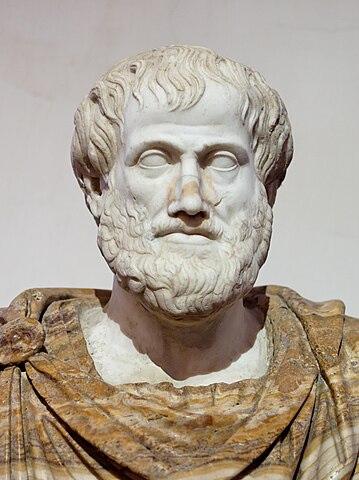
Aristotle

Aristotle
The philosopher Aristotle was one of the greatest intellects of all time. His numerous works were all recognized as the authoritative works in their fields, and they covered every single area of human knowledge of that time. He wrote on the physical and biological sciences, on logic and mathematics, political science and psychology, art and poetry, and many other fields. His work was so influential that later generations treated his writings almost like holy script.

Aristotle was hired by Philip of Macedonia to tutor his son Alexander. Later, when Alexander became the king of Greece, and eventually most of the civilized world, he supported his former tutor, enabling him to found his own philosophical school in Athens and to engage in extensive research.

Jewish tradition has very mixed feelings about Aristotle. On one hand, Maimonides clearly had a very high opinion of Aristotle, writing:[11]

דעת ארסטו היא תכלית דעת האדם מלבד מי שנשפע עליהם השפע האלקי עד שישיגו אל מעלת הנבואה אשר אין למעלה ממנה.
The intellect of Aristotle was the ultimate intellect possible for a human being except for someone upon whom flows the Divine “flow” to the point that he achieves prophecy, above which there is no higher level.
Nevertheless, Maimonides was far from a slavish follower of Aristotle, especially when Aristotle’s conclusions differed from the Torah. Similarly, the Kuzari quoted above, and other sources, appear to see him as a basically honest and brilliant man who struggled to find the truth but failed due to his background. There is even a legend (almost certainly apocryphal) that, towards the end of his life, he became acquainted with the teachings of the Torah and recognized its truth.[12]

On the other hand, other traditional sources speak very negatively of Aristotle. For example, the Vilna Gaon (R’ Elijah of Vilna, d.1797) is quoted as saying "שודאי הוא שהיה אריסטו כופר מתחילה ועד סוף" – “It is certain that Aristotle was a denier from beginning to end.”[13]

The Rema (R’ Moshe Isserles, d.1572), in his work, Toras HaOlah (1:11), recounts a story of Aristotle which reflects the belief, mentioned previously, that Greek wisdom originally came from contact with the Jews, and which also puts Aristotle in a very negative light:
כתב בשבילי אמונה כי כל עיקר חכמת ארסטוטליס גנובה מחכמת שלמה ע"ה, כי כאשר כבש אלכסנדרוס מוקדן ירושלים, השליט לאריסטוטלס רבו על אוצר ספרי שלמה, וכל דבר טוב שמצא בהן כתב שמו עליו, ועירב בהן מקצת דעות רעות כמו קדמות העולם וכפירת השגחה לחפות עליו שלא ידעו הבריות שבאו אחריו שגנב החכמה מיהודי, ואפשר שכל דבר שלא מצא עליו מופת חותך בדברי שלמה לא האמינו
It is written in Shvilei Emunah[14] that the entire essence of the wisdom of Aristotle was stolen from the wisdom of [King] Solomon. For when Alexander the Macedonian conquered Jerusalem, he appointed his teacher, Aristotle, over the library of the books of Solomon, and every good thing that [Aristotle] found there, he wrote his name on, and he blended in some bad opinions, such as the [belief in] the pre-existence of the world and the denial of [Divine] providence, to cover himself so that the people who came after him would not know that he stole the wisdom from a Jew. And, possibly, anything in the words of Solomon which he did not find a clear proof for he did not believe.[15]
Interestingly, a number of works attributed to Aristotle were translated into Hebrew and were treated as valid sources of wisdom. In particular, Aristotle’s Nicomachean Ethics – known in Hebrew as Sefer HaMiddos – is particularly significant and widely cited.

Hellenism and Judaism

R' Samson Raphael Hirsch
Rabbi Samson Raphael Hirsch (d.1888) writes[16] that Hellenism serves a vital spiritual function in lifting man out of the pit of savage vulgarity and licentiousness that is symbolized by Ham, the raw, uncultured man. Only after man has developed the higher and nobler sensibility symbolized by Japheth is it then possible for him to turn to the even higher spiritual aspirations of Shem:
[T]he education of raw unrefined humanity ton the sense of beauty is not the highest. Wavering, unsettled is the culture which only gives Man the satisfying of his own higher standards as the criterion of the activities of his life, but gives him no ideal external to himself, glowing in its own lights, as a beacon, a goal and a criterion. Only that which can elevate the mind to a knowledge of, and the feelings to a recognition of what is good and true in itself, leads a man to the height of what he is meant to be. …
But… this goal will not be achieved at once. … Out of the raw, uncultured man, a cultured man has first to be made. The demand which the God of Shem makes is no small one, it demands the complete devotion and and submission of the whole person to God. A person must first acquire “the taste” of something higher than he is in his raw nature, even if this something higher is at first also something that appeals to his senses. … This culture of beauty and grace… is a precursor of the semitic mission, a preparatory school for teaching people to reach the loftier concept of life, the still greater beauty which lies in a harmonious joining all the aspects of life under the single idea of devotion to God.

[1] The Greeks were divided into three tribes, the Ionians, the Dorians, and the Aeolians. Of these three groups, the Ionians appear to have been dominant. In particular, Athens – the center of Greek culture and, for much of Greek history, the most powerful Greek state – was Ionian. Ionia is also the name given to a region of Asia Minor on the eastern shore of Aegean Sea that was settled predominantly by Ionian Greeks. The dominance of Ionians in Asia Minor would have brought them into more direct contact with the Persian Empire and the other Eastern centers of civilization. The Ionians were also the dominant group responsible for Greek philosophy and science. All of these factors may explain why the Greeks as a whole were known, by the Jews and others, as Yavanim. Interestingly, the Ionians claimed to be descended from a man name Ion. This individual may well be identical with Javan the son of Japheth.

[2] However, Maimonides (Hil. Tefilin 1:19) writes that the Greek language was corrupted in later years and can no longer be used for Torah scrolls.

[4] Quoting from the arrangement of the Kuzari made by Rav Yechezkel Sarna, based on Kuzari 1:63-65.

[5] One of Rav Yehuda HaLevi’s basic teachings is the superiority of knowledge revealed by God (Torah) and passed down through a reliable tradition (mesorah) over knowledge found purely through human intellectual effort.

[6] In this paragraph, R’ Yehuda HaLevi focuses on what is possibly the most significant area of disagreement between the Torah and the philosophy of Aristotle. One of the most basic teachings of the Torah is chiddush ha’olam – that the world is created from nothing. Aristotle, however, taught kadmus ha’olam – that the world has always existed. It should perhaps be noted that the Abarbanel, in his Mifalos Elokim (5:3) argues that Aristotle, in making this argument, did not intend to argue against the Torah teaching that the world was created by supernatural means, but against other Greek schools of philosophy which believed that the world had come into existence by natural means.

[7] I do not know what R’ Yehuda Halevi’s source was for this quote, however, while not made explicitly, the sentiment is echoed in a few passages in Plato’s Apology, in which Socrates defends himself against accusations of heresy and atheism.

[8] Seder HaDoros (ג"א שפ"ה)

[9] Plato’s philosophical system, in particular, has a strong resemblance to concepts in Torah, particularly Kabala. A note printed in the beginning of the Tikkunei Zohar im Biur HaGra states:
חכמת הקבלה היא חכמת רוחניות התורה ושרשיה, כפי שבאה בקבלה לראשי האומה, והאור האלוקי הזה הופיע גם באהלי יפת, וגדולי חכמי יון נאותו לאור יקרות זה, והתקרבו במקצת דעותיהם לדעות חכמי הקבלה, וביחוד הפילוסוף אפלטון היוני...
The wisdom of kabala is the spiritual wisdom of the Torah and its roots, as it was received by the heads of the nation. This godly light also shown in the tents of Japheth, and the great sages of Greece enjoyed this precious light and came close, in part, to the opinions of the sages of kabala, especially the philosopher Plato the Greek.
[10] The Shalsheles HaKabala (R’ Gedaliah ibn Yachya, d.1588) makes the following statement:
קבלתי ממורי הגאון זקני זצ"ל כי הוא ראה בפי' הכוזר שעשה ר' נתנאל ן' כספי האומר אמר אפלטון אני הייתי עם ירמיהו במצרים ובתחלה הייתי לועג עליו ועל דבריו ולבסוף כאשר הרגלתי לדבר עמו ולדקדק במעשיו וראיתי כי דבריו דברי אלקים חיים אז אמרתי בלבי וקיימתי שהוא חכם ונביא
I received from my teacher, the gaon, my grandfather זצ"ל, that he saw in the commentary on the Kuzari written by Rav Nasanel ibn Kaspi (early 15th century) a statement quoting Plato saying, “I was with Jeremiah in Egypt, and in the beginning I mocked him and his words, but in the end, when I spoke to him regularly and carefully observed his deeds, I saw that his words were the words of the living God. Then I said in my heart and I determined that he was a sage and a prophet.”
(Page 137 in 1889 Warsaw edition.) Also see Seder HaDoros ג"א ש' and Midrash Talpiyos ענף ירמיה.

[11] Near the end of a letter he wrote to Rav Shmuel ibn Tibbon on the translation of Moreh Nevuchim.

[12] The Shalsheles HaKabala writes that a book was found, supposedly written by Aristotle, in which Aristotle recanted from all of his philosophical teachings and acknowledged the truth of the Torah. The Shalsheles HaKabala then goes on to quote at length from a letter, appended to this work, which Aristotle supposedly wrote to his disciple, Alexander the Great, in which he writes that he met a Jewish sage who proved to him the truth of the Torah and that he now wishes he could destroy all of his earlier works. Seder HaDoros even quotes a source that claims that Aristotle converted to Judaism!

[13] הקדמת ר' מנחם מענדל משקלאב לפי' הגר"א על מס' אבות – This statement may have been specifically intended to contradict the legends of Aristotle’s later change of heart.

[14] By Rav Meir ibn Aldabi (14th century).

[15] This last sentence is not from the Shvilei Emunah, but from the Rema. It appears to be an attempt to partially justify Aristotle’s mixture of false teachings into the wisdom of Solomon, similar to the argument of Socrates quoted from the Kuzari previously.

[16] In his commentary on Genesis 9:27 and in an essay titled, “Hellenism and Judaism” in Collected Writings of Rabbi Samson Raphael Hirsch, vol.2.


Sunday, September 30, 2012

Sukkos - The Sukkah and the Function of the Jewish People

In the Torah’s description of the festival of Sukkos, the Torah describes the obligation for Jews to dwell in sukkos – “booths” – for the entire seven days of the festival (Leviticus 23:42-43):
You shall dwell in sukkos for seven days; every native in Israel shall dwell in sukkos. In order that your generations will know that I had the children of Israel dwell in sukkos when I brought them out of the land of Egypt: I am Hashem your God.
For the seven days of Sukkos, a Jew is required to make the sukkah his main dwelling place. He must eat all his meals there, and, ideally, he is required to sleep there as well.

The Menoras HaMaor (Rabbi Yitzchak Aboav, Late 14th Century) explains that the underlying message of the obligation to dwell in the sukkah is to teach us place our trust purely in God. He writes (146:3-5):
...באה מצות סכה זאת ללמדנו שלא ישים אדם בטחונו בגבה ביתו וחזוקו ותקונו הטוב – ואף כי יהיה מלא מכל טוב – ואל יבטח בסיוע שום אדם – אע"פ שיהא אדון הארץ ומושל בה – אבל ישים בטחונו במי שאמר והיה העולם...
ולהעיר לאדם על זה, באה מצות סכה בזמן הזה – אחר אסיפת גרן ויקב בארץ ישראל... – לפי שבזמן הזה הוא זמן בעיטה לכל, שהאוצרות מלאים כל טוב והאדם כבר נאסף לעיר..., לפיכך צוה לצאת מביתו החזק וישב בסכה, כדי שיתעורר וישים מבטחו בשם ית' ויתן אל לבו כי כל הטוב שהגיע אליו מן היוצא בשדה, הכל בא לו ברצון ה'.... ויזכור שכל שמירת גופו וכל אשר לו מאת ה' ית' ולא יבטח באשר לו.
וגם באה מצוה זו להעיר ולהזכיר כי בסכות הושיב ה' ית' את בני ישראל במדבר ושמרם מן החרף ומן הקרח והצנה והגשמים והחום בלי בית ותקרה, ובזה יראו כי בכל דור ודור שומרם בוראם בלי בית וחומה דלתים ובריח.
The mitzvah of sukkah comes to teach us that a person should not place his trust in the height and strength of his home, or its good condition – even if it is filled with all good things – and he should not place his trust in any human being – even if he is the lord of the land and has dominion over it – but he should put his trust in He Who Spoke and the world came to be….
To bring forth this point, the mitzvah of sukkah comes at this specific time – after the grain and wine harvest in the land of Israel – for this is a time of rebelliousness for all, when the storehouses are full of all good things and one is gathered into the city…. Therefore, one is commanded to go out of his secure home and dwell in a sukkah, in order to awaken him to place his trust in God, and to take to heart that all the good that has come to him from going out to the field, it all came to him by the will of God…. And he should remember that his security, and the security of all that he has, comes from God, and he should not place his trust in his possessions.
This mitzvah also brings forth and reminds us that God had the children of Israel dwell in sukkos in the wilderness, and He protected them from the winter ice and cold, and from the rains, and from the heat, without a house or a ceiling, and through this they would see that in every generation their Creator would protect them, without a house, wall, doors, or key.
The basic message of the sukkah is our dependence on God; that He alone is the one true source of security and protection. R’ Avigdor Miller writes (A Kingdom of CohanimVayikra 23:43):
In the Wilderness our fathers had no walled cities inn which to find protection from the many potential predators. Our father’s possessed great wealth that they had taken from Egypt, and all the nations would have attempted to attack Israel to seize this wealth. But despite the fact that that our fathers possessed no fortifications or walls to protect them, and even no houses with sturdy walls, yet in their flimsy tabernacles of cloth and straw, they were more secure during these 40 years than at any subsequent time in their history. The only true security is Hashem: that is the lesson of Succos.
Rabbi Samson Raphael Hirsch
Ultimately, the message of the sukkah – that God controls everything, and that our welfare is entirely in His hands – is the basic message that the Jewish people exist to convey to the entire world. R’ Samson Raphael Hirsch writes (The Nineteen Letters, Letter Seven):
While mankind was to be taught by experience, and from its fate it was to gain knowledge about God and itself, the attainment of this aim was to be assured and furthered by a special arrangement. …There would be introduced into the ranks of nations one people which would demonstrate by its history and way of life that the sole foundation of life is God alone; that life’s only purpose is the fulfillment of His Will; and that the formal expression of this Will, specifically addressed to this people, serves as the exclusive bond of its unity.
This objective required a nation that was poor in everything upon which the rest of mankind builds its greatness and the entire structure of its life. To all appearances being at the mercy of nations armed with self-reliant might, it was to be directly sustained by God Himself, so that, in manifestly overcoming all opposing forces, God would stand revealed as the sole Creator, Judge and Master of history and nature....
Thus, this people came to constitute the cornerstone on which humanity could be reconstructed. Recognition of God and of man's calling found a refuge in this nation and would be taught to all through it's fate and its way of life, which were to serve as a manifest example, a warning, a model, a education.
For the sake of this mission, however, Yisrael could not join in the doings of the rest of the nations, in order not to sink down with them to the worship of material possessions and pleasure. It has to remain separate until the day on which all mankind will have absorbed the lessons of its experiences and the example of this nation, and will united turn toward God. Joining with Yisrael at that time, mankind will then acknowledge God as the sole basis for its existence and "as God is One, the recognition of His Name will be one." Then, "the teaching of His Law will go forth from Zion and the Word of God from Jerusalem."
The passage of the Jewish people through the desert encompassed by the “Clouds of Glory”, with no material protection but their trust in God, marked the beginning of the role of the Jewish people as the “Light unto the Nations”, which required their elevation and separation from the nations, but which would ultimately bring all mankind to the service of God in unity.

This transition is described in Kabbalistic terms by R’ Moshe Chaim Luzzatto (d.1747) in Derech Hashem (IV:8:2):
הנה ענני הכבוד שהקיף הקב"ה את ישראל, מלבד תועלתם בגשמיות שהיה לסכך עליהם ולהגן בעדם, עוד היתה תולדה גדולה נולדת מהם בדרכי הרוחניות, והוא כמו שעל ידי העננים ההם היו נמצאים ישראל מבדלים לבדם ונשואים מן הארץ, כן היה נמשך להם מציאות הארה המשכנת אותם לבד, נבדלים מכל העמים, ומנשאים ומנטלים מן העולם הזה עצמו, ועליונים ממש על כל גויי הארץ. ודבר זה נעשה בשעתו לישראל, להגיעם אל המעלה העליונה הראויה להם.... ומתחדש דבר זה בישראל בחג הסכות על ידי הסוכה.
The Clouds of Glory with which God encompassed Israel [in the wilderness], asides from their physical benefit, which was to shelter and protect them, also had a major spiritual effect. Just as the clouds caused Israel to be set apart and lifted above the earth [physically], similarly there was drawn a reality of illumination that dwelled only with them, separating them from all the nations and lifting them and removing them from this [physical] world itself, [so that] they were literally elevated above all the nations of the earth. This was done to Israel at that time, in order to bring them to the high level that was proper for them. … This [elevation and separation] is renewed [each year] for Israel on the festival of Sukkos through the sukkah.
Thus, the sukkah thus represents the role of the Jewish people in this world, as a distinct nation devoted purely to God, elevated and separated from the nations of the world, to serve as a model of what humanity’s relationship with God can and should be. The Jewish people, who’s very existence as a nation is a miracle, a people who’s fortunes throughout history have been clearly tied to their obedience to God’s will, testify through their existence and their fortunes to God’s dominion over history.

The prophet Zechariah (14:16, in the haftara of the first day of Sukkos) tells us that, ultimately, when mankind will come to recognize the truth of God’s dominion, then all the nations will come to celebrate Sukkos:
והיה כל הנותר מכל הגוים הבאים על ירושלים ועלו מדי שנה בשנה להשתחות למלך ה' צבאות ולחוג את חג הסוכות.
And it shall come to pass, that all who are left of all the nations that came against Jerusalem, shall go up from year to year to bow before the King, Hashem, Lord of Hosts, and to celebrate the festival of Sukkos.
In his commentary on the Haftaros, R’ Mendel Hirsch (d.1900) comments on this verse:
So we see Judaism as the religion of the future. Its truths acknowledged by all, its laws understood and kept, the general ones of humanness and morality by mankind in general, the special ones for Jews dedicating them to be the priests of mankind, by the Jews. The reign of everlasting peace will have started. All enmity, all hate of one to the other will have disappeared for by the universal recognition of God as their One King henceforth all men form one great family. And all class war will have come to an end by the knowledge and realization of the teachings of the Tabernacles Festival.

Thursday, September 20, 2012

VaYeilech - The Immortality of the Jewish People

Towards the end of Parshas VaYeilech God testifies that, no matter far the Jewish people may drift from the proper obedience of God’s will, the Jewish people will never forget the Torah (Deuteronomy 31:21):

כי לא תשכח מפי זרעו
“For [the Torah] will not be forgotten from [the Jewish nation’s] descendants”

Rabbi Samson Raphael Hirsch writes that “these words show us the secret of [the Jewish people’s] national immortality and of its ultimately fulfilling its mission. However deep its fall may be, and however far away its sin may take it, one thing remains throughout all the changes of its existence, one thing accompanies it through the darkest paths of its sufferings, and that is: - the Torah.”

God assures us that no matter how far we may stray, no matter how deep the exile may become, the Torah will always be with us. As Rabbeinu Gershom (d.1028) wrote (in Selicha 42, recited Erev Rosh HaShana and in the selichos of Neila on Yom Kippur):

The Holy City and its regions     העיר הקדש והמחוזות
Are turned to shame and to spoils     היו לחרפה ולבזות
And all its desirable things are buried and hidden     וכל מחמדיה טבועות וגנוזות
And nothing is left except this Torah.     ואין שיור רק התורה הזאת

Throughout history, every time that it appeared as if the Torah would be erased from human memory, whether by Greeks, Romans, Crusaders, Inquisitors, Cossacks, Nazis, or Communists – the Torah always rose once again to flourish and grow in its pure and unadulterated form. This is a vivid testimony to God’s control over the history of the world.

Thursday, September 6, 2012

Ki Savo - The Tochacha and Serving God with Joy

The bulk of Parshas Ki Savo discusses the prophecy of reward and punishment for the Jewish people. The Torah tells us that if we listen to the voice of God and obey his commandments, then we will be greatly blessed. It is here that we find the famous verses (Deuteronomy 28:3,6):
ברוך אתה בעיר וברוך אתה בשדה:
ברוך אתה בבאך וברוך אתה בצאתך:
“Blessed shall you be in the city, blessed shall you be in the field.
Blessed shall you be in coming, blessed shall you be in going.”

The prediction of blessing for obedience to the commandments of God is followed by the Tochacha – the Admonition. In the Tochacha, the Torah describes, at length and in very harsh and frightening terms, the terrible punishments that await the Jewish people, as a people and as individuals, when they fail to obey the commandments of the Torah. The Tochacha speaks of warfare and slavery, disease and madness, famine and poverty, and every other form of human suffering. The concept of reward and punishment is made very graphically clear.

Rabbi Samson Raphael Hirsch writes (Deuteronomy 28:1) that the Tochacha is intended to stress the responsibility of every individual for the spiritual welfare of the nation. For when the nation suffers for its general failings, every individual – even the most righteous – suffers with it.

Although the subject matter of the Tochacha is very difficult for us, it also provides us with an essential key to understanding the events of Jewish history. The Jewish people have experienced great suffering over the millennia, despite consistently being morally superior to the surrounding peoples. This is the result of our special relationship with Hashem. Like any caring parent, God does not want His children to simply be superior to the surrounding environment, but that they should be truly good and righteous. Once we have absorbed the lessons of the Tochacha, the tragedies of Jewish history, while still tragic, are no longer mysteries.

When the Tochacha is read in the congregation on Shabbat, the custom is to read it in a low voice. Rav Avigdor Miller explained (The Path of Life p. 293) that this is to teach us an important lesson. Even when it is necessary to give strong rebuke to another, it should be done in as gentle a manner as is possible. “The most effective way of communicating and having people listen to you is to speak in a soft voice. ‘The gentle words of the wise are heard.’ (Ecclesiastes 9:17)”

In the midst of the Tochacha we find the statement that the Jewish people are being afflicted with these terrible punishments because they did not serve God with joy (Deuteronomy 28:47):

תחת אשר לא עבדת את ה' אלקיך בשמחה ובטוב לבב מרב כל:
“For you did not serve Hashem your God with joy and a good heart, when all was abundant.”

At first glance, the implication of this verse is that although the people were performing the mitzvos properly, their lack of joy in their service to God resulted in severe punishment. This is very surprising. While we can readily readily recognize the virtue of joy in the performance of the mitzvos, the lack of joy—by itself—would not seem to warrant such harsh punishment.

R' Matisyahu Salomon
Rav Mattisyahu Salomon, the mashgiach of the Lakewood yeshiva, explains (מתנת חיים-מועדים עמ' קל"ה) that this is not the intent of the Torah. Certainly, the grave punishments of the Tochacha are reserved only for the complete failure to perform the mitzvot entirely. The intent of the verse here is simply to explain how it is possible that the Jewish people could ever fall to such a low level of Torah observance. The Torah teaches us that this can only happen if, even when the Jewish people were observing the mitzvot, their observance was joyless. Only then could they come eventually to abandon the mitzvot entirely.

This teaches us a very important lesson. If one does not find joy in Torah and mitzvot, this is a clear indication that his Torah and mitzvot are flawed in some significant way. Perhaps he doesn’t properly appreciate the significance of mitzvot. Or perhaps he is performing the mitzvot incorrectly. A dry and mechanical observance of the mitzvot will quickly lose its appeal. We are required to find a way to serve God with joy.

Whenever we encounter an obligation that touches upon our inner feelings, people will often ask how can God command us to feel a certain way? We often hear people say, "I can't help how I feel!", as if our feelings are not subject to our control, and, in fact, there is a significant degree of truth to this. Exerting direct control over our feelings can be very difficult, and in many cases it is not possible, and attempting to do so can actually be harmful. But if this is true, then how can God demand from us that we control our emotions? For example, in our case, how can God require us to serve Him "with joy and a good heart"?

The answer is that while our emotions may seem to arise as if of their own accord from our experiences, how we perceive our experiences has a profound impact on our feelings and emotions. The exact same experience can inspire very different feelings, even in the same person, depending on how the person interprets or perceives the experience.

I remember once, as a child (I was probably about 9 years old), I was walking with some friends in our neighborhood and we encountered an older boy. He was probably only about 13 years old, but to us he seemed like a really big boy, almost an adult. He came over to us and starting asking us impolite questions, and making faces at us, and generally being rude. So we were rude back, and he started to run after us, and we ran away, and we called him names, etc. While this was going on we ran into an adult we knew, and we told him, "That boy is being mean to us!" He looked at the boy and, to our surprise, he became visibly upset, at us! He explained to us that this boy had not been making fun of us, he was mentally disabled and he was just being friendly. I still remember how this one piece of information hit me like a wave of ice water. Suddenly, in the place of my sense of justified anger, I felt guilt and shame. I looked at the boy, and now I could see it too, that he was just being nice and how confused and hurt he was by our behavior. Even today, more than thirty years later, I feel guilty when I think about this incident.

Ultimately, all of our emotions are rooted in how we perceive the world around us, and if our perception of the world is erroneous, then our feelings will reflect that error. It precisely in this manner that we are required to control our emotions, not by simply repressing our feelings, but by bringing our mental picture of the world into congruence with the ultimate truth revealed in the Torah.

In no area is this more important than with regard to happiness, and it is for this reason that failure to serve God with happiness is indicative of a much deeper spiritual problem. God has given us the great gifts of Torah and mitzvos, yet so often we act as if these are not gifts at all but burdens! This is rooted in a fundamentally distorted perception of our relationship with God that can be illustrated with the following analogy:

Imagine the owner of a small store, living in an urban neighborhood. Everyday he struggles to keep his business functioning, so that he can bring home enough money to pay the bills. Then one day, the door opens and in walks one of the local mobsters, followed by two huge thugs. "Nice store you have here, bud," he says with a grin, "wouldn't want to see anything happen to it." The two thugs chuckle, as a chill runs down the store-owner's back. "Tell you what," the mobster continues, "we have a service for guys like you. All you gotta do is pay a monthly fee, and we guarantee that nothing happens to your place of business. It's like insurance. You interested?" The storeowner knows exactly what is happening, and he realizes that he has no choice but to agree. "How much?" "A special deal for you, just $10 a month," the mobster replies, "that's practically for free!" And so, every month, the store-owner hands over his $10 dollars. And even though it's just $10, every time he pays that money he is filled with anger and resentment. But he has no choice; the mobster is stronger than him and if he doesn't do what the mobster says, then the mobster will destroy everything he has.

Now imagine, in a parallel universe, the same store-owner, and one day the door opens and in walks a fellow in a suit. "Hi," he says with a smile, "I don't know if you remember me, but I grew up in this neighborhood. You once helped me when I was a little kid and one of the bigger kids was bullying me. I have done very well for myself over the years, and I really want to show my gratitude to you, and to the community as a whole that got me off to such a great start. I think your store could do very well with a proper capital investment, so I would like to become a silent partner in your business." The surprised store owner asks, "How much money are you talking about?" and the fellow responds with a number well into the seven digits. "Don't worry," the fellow says, "your obligation to me will be minimal. I'm not really looking to make money off this, so all you have to do is send me a monthly payment of $10 a month." The fellow then writes out a check, hands it to the store-owner, and walks out the door. And so, every month, the store-owner pays his ten dollars to his benefactor, and the every time he wonders how such a minuscule payment can possibly be sufficient. Surely he ought to be doing more, but the "investor" won't hear of it.

There are two ways that we can view our obligation to obey God's commandment. I can look at all that I have: my life, my wife, my children, my home, my job, my cars, my bank accounts, my intelligence, my health, etc. and I can say, "These are mine! But God says that if I don't do what He says, He will destroy it all!" So I obey, because God is stronger than me, and I am afraid. Yet, every time I obey God's command,  I resent it.

Or I can recognize the truth, that everything that I have in life was given to me by God. I had no prior claim on anything before He gave it to me; I didn't even exist! God owed me nothing, yet He gave all of this to me, even though I had done absolutely nothing to earn it. And now God tells me that there are some things that He expects from me. There are a some rules and regulations that apply to all of these gifts that he has given me. When one looks at the world with this perspective, it is impossible not to see the mitzvos as the ultimate bargain. How can you not serve God with joy, when you realize that all God wants in exchange for all that He has given us is that we follow a few rules?

The sad reality is that it is all too easy to forget the true nature of the world, and to see God as if He is interfering in our lives. Much of the daily prayer service is intended precisely to help us keep the true perspective clear in our minds. As we see from the Tochacha, this task is of central importance. A Judaism without joy is a Judaism that is doomed to failure, if not in one generation, then the next.

Rav Moshe Feinstein would frequently say, "People destroyed their children by always repeating es iz shver tzu zien a Yid (it is hard to be a Jew). No – it is not hard to be a Jew. It is beautiful and joyous to be a Jew." (Reb Moshe p.73) If we truly appreciate the privilege of Torah and mitzvos, then we will always be filled with joy and happiness that we are Jews.

Thursday, July 12, 2012

Pinchas - The Miracles of Daily Life

At the end of Parshas Pinchas, we read of the various communal offerings made in the Temple on the mo'adim - the special "appointed" times of the year. Conventionally, the term mo'adim includes all the various festivals of the Jewish year, thus the Torah goes on to list the communal offerings of the festivals of Passover, Shavuos, Rosh Hashana, Yom Kippur, Sukkos and Shemini Atzeres. However, the Torah's discussion of the special offerings of the  mo'adim seems to go far beyond the conventional understanding of the term, and includes not only the festivals but also Rosh Chodesh (the new month), the Sabbath, and even the daily tamid offering.

R' Samson Raphael Hirsch (Numbers 28:2 and in his commentary on the Siddur, p.23) notes that the inclusion of the daily tamid offering into the category of the mo'adim conveys "a Truth of no small importance". He writes (in his Siddur):
God appointed מועדים, special occasions that attest to His rule and summon His people to His presence, to commemorate annually His mighty acts in Egypt, at the Red Sea, on Mount Sinai and in the wilderness. These miracles actually involved suspension by God of the natural order which He Himself had instituted, and thus bear eloquent witness to His greatness. In the same manner, God also appointed the transitions of morning and evening, which occur daily with clock-like regularity, to be מועדים too. These daily, "ordinary" natural phenomena are also to serve as messengers testifying to God's power and summoning the people to worship Him, to demonstrate to us the hand of God as it can be seen even in the course of the world, and to call each of us to come before Him.
For the very steadiness, the regularity, of the phenomena of nature is a much clearer, more wonderful manifestation of Divine wisdom and omnipotence than the suspension of these natural laws when God's miracles were executed. In fact the purpose of these special acts of God which interrupted the regular order of nature was to point to Him as the Lawgiver of these natural laws, lest the thought of Him as Regulator, Master, and Lord of the world order be lost through the steady regularity of the natural phenomena.
In this passage, Rav Hirsch is articulating a very basic concept. Contrary to how we often think, the laws of nature are no less a product of God's will and power than even the most dramatic open miracles. In fact, fundamentally, the only distinction between the laws of nature and open miracles is that God apparently prefers the laws of nature to be the "normal" mode of operation for His universe. As Rav Hirsch points out, both here and elsewhere in his writings, the regularity and predictability of the natural laws can cause us to overlook or forget that they are not fundamentally any different from outright miracles. Indeed, the primary function of miracles is precisely to remind us that all of the natural world is subject to God's will, and that even the most ordinary of natural events is actually a miracle.

The principle being taught here by Rav Hirsch can be found in many earlier sources. In his commentary on Exodus 13:16, the Ramban (Rabbi Moshe ben Nachman, also known as Nachmanides, d.1270) develops this theme at some length, arguing that the function of miracles is to testify to the truth of the basic principles of belief, that God is all powerful and that He supervises and manages the events of this world. The Ramban summarizes this idea in a famous statement:
ומן הניסים הגדולים המפורסמים אדם מודה בנסים הנסתרים, שהם יסוד התורה כולה. שאין לאדם חלק בתורת משה רבינו עד שיאמין שכל דברינו ומקרינו כולם נסים, אין בהם טבע ומנהגו שך עולם, בין ברבים בין ביחיד.
From the great public miracles, man is led to acknowledge the hidden miracles, for they (i.e. the hidden miracles) are the foundation of the entire Torah. For a man can have no share in the Torah of Moses until he believes that everything that happens to us, whether as a community or as individuals, is entirely miraculous, and there is no element of "nature" or "the way of the world" in them.
Sometimes people, especially children, ask why God doesn't perform miracles for us nowadays. In fact, with the exception of the period immediately following the Exodus from Egypt, miracles have always been relatively rare events. Even in the days of the prophets, the ordinary Jew lived a life governed, on the surface at least, by natural laws. Why doesn't God perform miracles for on a regular basis? Wouldn't that make it easier for us to be better and more faithful Jews?

There are many answers to this question (not the least being that, as we see from the sins of the golden calf and the spies, the mere fact that one has witnessed open miracles does not ensure that one will avoid even obvious sins). This principle that we have just learned from Rav Hirsch and the Ramban gives us a deeper insight into why this is so. Ultimately, the will of God is not that we should recognize Him when He performs open miracles. God wants us to recognize His presence in every aspect of the natural world. In even the most ordinary and mundane elements of life, we should see the wisdom and kindness of the Creator.

Rav Avigdor Miller
One recent figure who truly embodied this idea was Rav Avigdor Miller ז"ל (d.2001). Rav Miller was famous for his ability to appreciate the wisdom and kindness of God in every aspect of life. I once heard Rav Simcha Bunim Cohen, a prominent Lakewood rabbi who is married to Rav Miller's granddaughter, speak of a minor incident he witnessed with Rav Miller that illustrated his unique ability in this area. Rabbi Cohen was accompanying Rav Miller on one of his regular walks in Rav Miller's Brooklyn neighborhood. As they were walking, Rav Miller noticed a peach pit lying on the sidewalk. Pausing in his walk, Rav Miller began to jump up and down on the peach pit. Somewhat bemused by Rav Miller's surprising behavior, Rabbi Cohen asked him what he was doing. Rav Miller pointed to the peach pit and asked him if it appeared damaged. Rabbi Cohen responded that it looked fine. Then Rav Miller pointed out that the peach pit is so hard that he had been unable to break it open even by jumping up and down on it, yet if it was placed in the ground and watered, after a while it would simply open up on its own and a delicate new plant would grow from it, eventually developing into a new peach tree. From this we see the wisdom and kindness of the Creator, Rav Miller continued, for he provided the seed with a strong protective shell, yet that hard shell will automatically open when it is time for the young tree to come out.

This story represents an ideal that we all need to work towards. We need to be aware of God's presence, of His wisdom and kindness, in every moment of our lives. We should see him in the food we eat, in the functioning of our bodies, and in every aspect, both human and natural, of the world around us. Rav Miller himself wrote a great deal about this idea, much of which is based upon the classic mussar work, Chovos HaLevavos. In particular, the second section of the Chovos HaLevavos, called the Shaar HaBechina (The Gate of Examination), focuses on this essential concept.


Thursday, July 5, 2012

Balak - The School of Abraham and the School of Balaam

In Parshas Balak we encounter the enigmatic case of the wicked prophet Balaam. The very idea of a wicked prophet raises obvious questions. Perhaps the most basic question is how can a person who speaks to God choose to act wickedly?

The key to this puzzle is found in the mishna in Pirkei Avos (5:19 or nearby) in which the Sages teach us:
כל מי שיש בידו שלשה דברים הללו מתלמידיו של אברהם אבינו, ושלשה דברים אחרים מתלמידיו של בלעם הרשע.
עין טובה ורוח נמוכה ונפש שפלה - מתלמידיו של אברהם אבינו. 
עין רעה ורוח גבוה ונפש רחבה - מתלמידיו של בלעם הרשע.
Whoever has these three things is from the disciples of our father Abraham, and whoever has three other things is from the disciples of the wicked Balaam.
A good eye, a subdued spirit, and a modest personality - [such a person is] from the disciples of our father, Abraham.
A wicked eye, an uplifted spirit, and a greedy personality - [such a person is] from the disciples of the wicked Balaam.
The commentaries discuss the exact nature of each of these traits (and bring Scriptural examples of each in connection to Abraham and Balaam). The basic explanation of these three traits (and its opposite extreme) is as follows:
  • עין טובה - A Good Eye: This refers to the trait of הסתפקות - being satisfied with what one has. The opposite is the "wicked eye", which is a jealousy of others and a desire to possess that which belongs to them. The full extent of the "good eye" - as defined by Rabbeinu Yonah - is generosity, i.e. the ability to give to others.
  • רוח נמוכה - A Subdued Spirit: This refers to humility. The opposite is the "uplifted spirit", i.e. arrogance and pride.
  • נפש שפלה - A Modest Personality: This refers to the trait of self-control with regard to physical desires. The opposite is the "greedy personality" that constantly seeks to satisfy every desire.
The mishna continues:
מה בין תלמידיו של אברהם אבינו לתלמידיו של בלעם הרשע? תלמידיו של אברהם אבינו אוכלין בעולם הזה ונוחלין בעולם הבא, שנאמר, "להנחיל אוהבי יש ואוצרותיהם אמלא." אבל תלמידיו של בלעם הרשע יורשין גיהנם ויורדין לבאר שחת, שנאמר, "ואתה אלהים תורידם לבאר שחת אנשי דמים ומרמה לא יחצו ימיהם ואני אבטח בך."
What is the [ultimate] difference between the disciples of our father Abraham and the disciples of the wicked Balaam? The disciples of our father Abraham eat in this world and inherit the world to come, as it says (Proverbs 8:21), "To cause those that love Me to inherit substance [in the world to come], and I shall fill their storehouses [in this world]." But the disciples of the wicked Balaam inherit Gehinom and descend into the pit of destruction, as it says (Psalms 55:24), "But you, God, shall bring them down into the pit of destruction, men of blood and deceit shall not live out half their days, and I shall trust in You."
There is a great deal to discuss in this mishna, but we will focus on a very basic issue. Although the mishna is contrasting two groups of "disciples", the disciples of Abraham and the disciples of Balaam, it is not speaking of literal students of these men. Rather, a disciple is one who follows in the path of another. Thus, Abraham and Balaam represent two opposing schools of thought, each of which has followers.

Now, whenever we speak of opposing schools of thought, we are always speaking of two different approaches to the same subject matter. (Thus, we never speak of a debate between a school of thought in art and a school of thought in chemistry.) If there is a conflict between the school of Abraham and the school of Balaam, then both schools must be dealing with the same basic issues.

The Tiferes Yisrael (commentary on the Mishna by R' Yisroel Lipschutz, d.1860) explains the nature of the two schools of thought:
[מתלמידיו של אברהם אבינו] אפילו הוא עכו"ם, עכ"פ הוא מתלמידי אאע"ה שלימד לכל בני עולם דעת אלהים ומדות ישרות. ומה"ט לא נקט תנא תלמידי משרע"ה, דתלמידי משרע"ה צריכים לקיים כל התורה.
[One who possesses these three traits,] even if he is a gentile, is still from the disciples of our father, Abraham, for he taught all mankind the knowledge of God and upright character. It is for this reason that the mishna did not say, "the disciples of Moses, our teacher", for the disciples of Moses must uphold the entire Torah.
Thus, the school of Abraham is one that is far broader than the conventional limits of "Judaism," and applies to all mankind. It is the school that follows the basic teachings of Abraham, i.e. the knowledge of God (דעת אלהים) and upright character (מדות ישרות).

As is clear from Scripture, Balaam also fully recognized God as the Creator and All-Powerful Lord of the universe. Balaam also had דעת אלהים - the knowledge of God. However, while Balaam's intellectual recognition of God was of an extraordinarily high level, he did not recognize the importance of מדות ישרות - upright character. To Balaam, and those who follow in his path, the knowledge of God is all that matters. Yet, not only is this insufficient, but, as the mishna states, the knowledge of God without upright character is literally the path to damnation.

R' Samson Raphael Hirsch
This idea is expressed by R' Samson Raphael Hirsch in his commentary on the Torah in this parsha (Numbers 22:8) (emphasis added):
We saw in Abraham's time that, in the midst of a polytheistic world, there was still a Malchi Zedek, the priest of the highest god, who was the One and only God of the Abrahamites, how Job and his friends appeared as pure honourers of this One, so we see Balaam also considering himself and calling himself solely in service of this One.
Altogether, the monotheistic truth as opposed to the polytheistic error is not the special, and certainly not the whole, characteristic of Judaism. That is rather the monotheistic truth with the full realization of what it entails for human living, the identifying One God with one mode of life, by His revealed Law.
But Balaam's monotheistic spiritual height appears morally muddled, far off from even that of Malchi Zedek, far from a Job and his friends. His high spiritual gifts bringing him near to God were subordinated to his egoism and placed themselves at the service of earthly potentates and mighty ones and their lowest desires.
This is a profoundly important lesson. A Jew can only function as a Jew, a disciple of Moses, if he is already functioning on the more basic level of a proper human being, a disciple of Abraham. While a proper human being must have knowledge of God, that is only the beginning. To be a true disciple of Abraham one must also have מדות ישרות - proper character traits. Otherwise, regardless of one's apparent spiritual achievements, one is actually on the path to the pit of destruction.